






Occitanie
This region in south-west France has much to tempt anyone in search of a new life
Regional capital: Toulouse
Departments: Aude, Gard, Hérault, Lozère, Ariège, Aveyron, Pyrénées-Orientales, Gers, Haute-Garonne, Hautes-Pyrénées, Lot, Tarn, Tarn-Et-Garonne
Main Cities: Montpellier, Perpignan, Nîmes, Toulouse, Tarbes, Albi
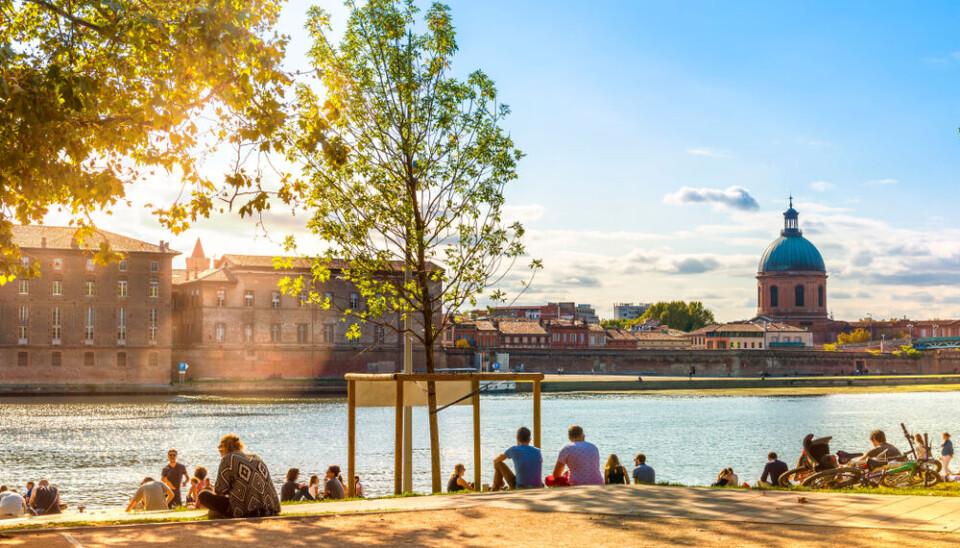
With a history as dramatic as its landscape, this region in south-west France, comprising Midi-Pyrénées and Languedoc Roussillon, has much to tempt anyone in search of a new life.
The Romans left their mark across the region, in cities and towns such as Toulouse, Narbonne and Gaillac. The Cathars built their fortresses in the mountains and foothills.
The medieval walled city of Carcassonne is just one of several Unesco World Heritage sites in the region.
Property prices

Median prices per m2 for non-newbuild apartments in the third quarter of 2025: Toulouse €3,260 +0.6%, Montpellier €3,410 +2.9%
Median prices for non-newbuild houses in the third quarter of 2025: Toulouse €314,700 +1.5%, Montpellier €403,100 -6%
(figures taken from the most recently available French property report (Jan 26) from the Notaires de France, % year-on-year change: July 1, 2025 to September 30, 2025 / July 1, 2024 to September 30, 2024)
Character of the region
Occitanie is the second-largest region in mainland France. It is known for its rich history, strong economy and diverse landscapes encompassing the Mediterranean coast and mountainous areas such as the Pyrenees.
The region is marked by a blend of traditional agriculture, particularly wine production, and modern industries such as aerospace and technology. Occitan, also known as langue d'oc, is spoken in parts of the region and is considered to be closely related to Catalan. The capital is Toulouse.
Population/density
6.1 million people across 72,724 sq km (Insee figures 2023 [latest available]) = approx. 9% of the population
Fact: it is the fourth most populous region in France
Weather
Mild, wet winters (January average 6C), hot dry summers (August average 23C)
Local industries
Agriculture, tourism, technology, aerospace (Airbus and other companies based in Toulouse).
Cities and towns
The capital Toulouse is a thriving and dynamic hub nicknamed ‘La Ville Rose’ for its old terracotta buildings – as the fourth-largest city (after Paris, Marseille and Lyon), it is as historic as it is forward-thinking.
Montpellier is an elegant spot that similarly has a large student population, while others including Nîmes (home to exceptionally well-preserved Roman ruins), Perpignan (with rich Catalan culture), and Béziers (a center for wine-making) offer further insights into the region.
Food and drink
Wine (Picpoul de Pinet, Banyuls, Gaillac, Cahors), armagnac, cheese (Roquefort, Bleu des Causses, Tomme des Pyrénées, Cabécou), oysters, anchovies, cassoulet, saucisse de Toulouse, gâteau à la broche.
Cultural points of interest
The 240km-long 17th century Canal du Midi is a feat of engineering that starts in Toulouse and ends near Marseillan on the coast. Other historical attractions include the walled city of Carcassonne and nearby Cathar castles, while Narbonne, the Pont du Gard and Nîmes all offer Roman history.
Also of note are the villages – Occitanie is the region with the highest number of villages labeled the most beautiful by Les Plus Beaux Villages de France association (51 out of 176).
Major transport points
Airports: Toulouse–Blagnac (TLS), Montpellier–Méditerranée (MPL)
Trains: Toulouse-Matabiau, Montpellier-Saint-Roch, Nîmes, Perpignan, Carcassonne
Motorways: A9, A61, A62, A64, and A75