Your guide to understanding French terms around wildfires
Each term refers to a distinct stage in how firefighters bring a wildfire under control
The terms can help you if a fire breaks out near you in France
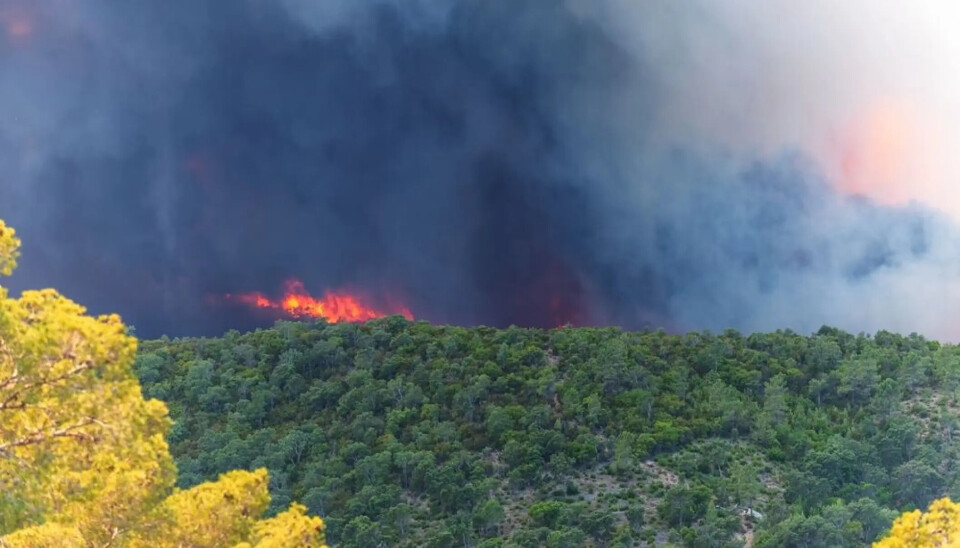
ER_09/Shutterstock.
Every summer, as forest fires break out across France, officials and news reports reach for a specific set of technical terms to describe how a blaze is progressing.
Words such as fixé, maîtrisé, circonscrit, noyé and éteint are often used interchangeably but each one actually refers to a distinct stage in how firefighters bring a wildfire under control.
Understanding this vocabulary can help you follow official updates more accurately if a fire breaks out near you.
'Fixed' (fixé): the fire has stopped advancing
A fire is described as fixé once it has stopped spreading along its main path. The blaze is still burning, but the area covered by the flames is no longer growing.
This is usually the first objective firefighters aim for when they arrive at a wildfire. Crews focus on the most aggressive parts of the fire, typically its leading edge and the downwind side, where flames spread fastest.
Even once a fire is “fixed", it can still be highly active along its flanks, with flare-ups continuing to occur. In short, a fire being fixed does not mean it is under control.
'Contained' (maîtrisé): the biggest flames are out
A fire is classed as maîtrisé once its most intense flames have been extinguished. At this stage, firefighters have brought the fire's edges under control and are systematically putting out any flames along them.
It is possible for a fire to be "fixed" but not yet "contained" which means it is no longer spreading, but significant flames are still burning.
'Encircled' (circonscrit): firefighters have surrounded the blaze
Once a fire is contained, crews work to encircle it entirely, positioning resources on all sides to prevent any further spread.
When a fire has been surrounded on every side by firefighting teams, it is described as circonscrit. This stage involves careful strategy, with crews calculating the likely speed and direction a fire could still spread based on wind and terrain.
'Drowned' (noyé) and 'out' (éteint): the final mop-up
After a fire has been fixed, contained and encircled, firefighters move on to eliminating every remaining hot spot, a process known as noyer (to drown) the fire. This involves thoroughly soaking the ground and, where necessary, digging into it to douse embers that could reignite the blaze. It can be a slow and physically demanding task for firefighter crews.
A fire is only declared éteint (out) once there are no hot spots, embers or wisps of smoke left. Only then can firefighters finally leave the scene and return to their station.
'Mouillant' and 'retardant': the chemicals firefighters use
Alongside water, French firefighting teams often use two other substances to fight wildfires and protect vegetation that is under threat.
A wetting agent (mouillant) is mixed with water to help it soak into vegetation more effectively. A retardant, meanwhile, is a red-coloured substance sprayed onto vegetation to slow a fire's progress. Its colour allows crews to see at a glance which areas have already been treated.
Live map: Where are wildfires in France today?
Aerial firefighting resources
When ground crews need extra support, aerial resources are often called in:
The Canadair, named after the Canadian firm that developed it, is an amphibious water-bomber that can scoop up water directly from a lake, river or the sea, carrying up to 6,000 litres.
The Dash is another water-bomber aircraft, but it refuels on the ground at dedicated sites known as pélicandromes, and can carry as much as 10,000 litres.
Water-bomber helicopters typically carry between 1,000 and 1,500 litres, either in an onboard tank or in a bucket suspended beneath the aircraft.
Why 'hectares covered' and 'hectares burnt' are not the same thing
You may also see reports referring to the number of hectares a fire has "covered" (parcouru) versus how many it has actually "burnt" (brûlé) and these figures are often different.
This is because flames can spread across a wide area without burning every scrap of vegetation in their path. Wind can carry burning embers well beyond the main fire, starting new patches of flame and effectively allowing the fire to "jump" over unburnt ground.
As a result, a fire might be reported as having covered 10 hectares while only eight were actually burnt. It also explains why the final total of burnt land is sometimes lower than earlier estimates made while a large fire was still active.
How wildfire danger levels are graded
Météo-France's forest fire weather service rates daily wildfire risk on a four-level scale based on weather conditions: low (green), moderate (yellow), high (orange) and very high (red).
You can see if your part of France is under alert here.
For real-time information on ongoing wildfires in France, visit the monitoring service feuxdeforet.fr.