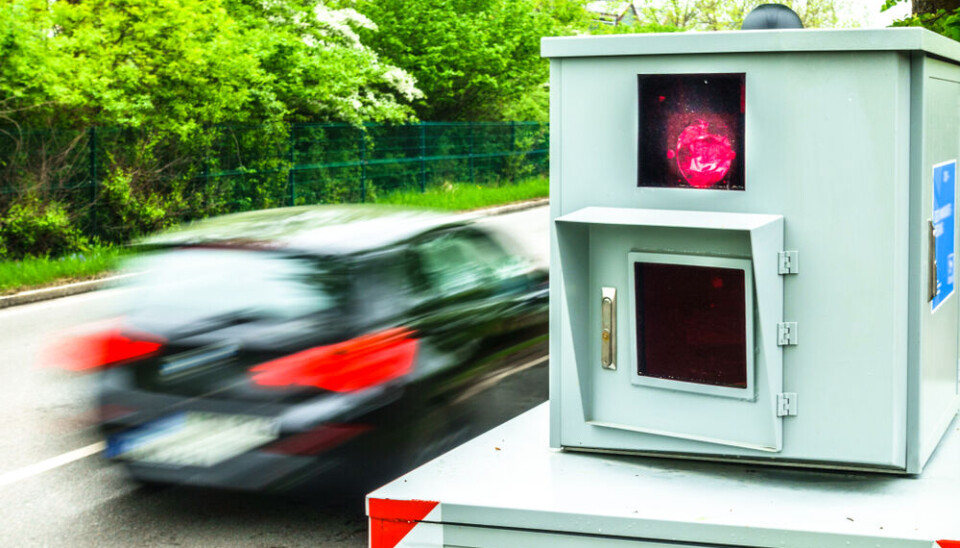
Drivers in France say they are feeling increasingly targeted as penalties for road offences toughen, speed cameras multiply and speed limits lower across the country.
However, the government and road safety campaigners say a tough approach is needed to reduce road deaths, which have stalled in recent years: last year’s estimated 3,260 deaths was similar to pre-Covid levels, while April 2026 figures were up 15% year on year.
Across the Channel in Great Britain, the latest annual figure is 1,579, or less than half for a comparable population.
France has a road network more than twice as large but only six million more cars – 40 million compared to 34 million – so the difference is not explained by busier roads.
Thousands of new cameras are expected in towns and villages as mairies gain new powers to install them from 2027, on top of the usual cameras installed by the central state.
Four departments now have an immediate driving ban if a driver is seen with a phone in their hand. A minister who oversees road safety, Marie-Pierre Vedrenne, favours it being made nationwide.
She also supports compulsory helmets for cyclists, who alongside pedestrians and two-wheeler riders are bearing the brunt of the latest increases, and a crackdown on nitrous oxide abuse, which she cited alongside drugs, alcohol and speeding as likely causes of rising deaths.
She told journalists: “We’ve got a rising graph and it’s intolerable. So, we have to put in place different measures to, at the same time, have prevention policies and, to boost sanctions.”
Already, last year, sanctions for the worst speeding offences were toughened and it can now lead to jail which it did not before, the minister said.
More communes are also enforcing 30km/h zones, while in Normandy some areas which were permitted to raise departmental road speeds back to 90km/h after a nationwide change to 80 sparked protests, have been forced by a court to drop them again.
'Rubbish' road safety
Pierre Chasseray, general delegate of drivers’ association 40 millions d’automobilistes, said: “Repressive measures against drivers have been rising for the last 20 years or so but it’s not working. We’re at the same road deaths figure as 2013.
“It’s always more speed cameras, and always more deaths on the roads, because France is rubbish when it comes to road safety. We think increasing penalties works, but you can increase penalties as much as you like, it doesn’t change behaviour.
“What’s needed is education. For example, the day you make someone understand why using a smartphone at the wheel is banned, you’ve won. As long as there are people who are only afraid of a penalty, not an accident, it won’t work.”
He said the ‘zero tolerance’ mobiles policy also risks penalising people who are not talking on their phone or checking messages, or who are stopped at lights, or even people who pick up a box of sweets that might look like a phone.
The national rollout idea was “typical of ministers who have no new ideas”, he said. “It’s like the reduction to 80km/h, which was supposed to save lives, but did not.”
He added that people do not drive just for fun, but because they need to.
“You suspend someone’s licence, but they need to get to work - what do they do? They’ll drive anyway.”
40 millions d’automobilistes fears new council cameras could be instrumentalised politically.
Some mayors have been asking to keep the money from them, he said.
“It will also give speed cameras a political dimension. There are certain towns that’ve decided to crack down on motorists and now they will be able to put them in areas with 20 or 30 km/h speed limits and we’ll end up with motorists being fined, caught on camera, losing their licences, paying out huge sums.
“And in the minds of environmentalists, this will stop those ‘bad’ motorists from using their cars. And the French economy will continue to sink.”
He said there are “more and more” low-speed zones and when he speaks to mayors they admit to capping speeds at 30 “to make sure people drive at 50”, which he said is “daft – putting regulations in place knowing full well they can’t be enforced.”
In his view, speed cameras “are all for the money” and do not prevent accidents. He said the proof is that there is no margin of tolerance before a fine is handed out (only a technical error margin) and most fines are for speeding under 10km/h.
A press spokesperson for road safety association Prévention Routière said: “We have had numerous measures and penalties put in place over the last few years; the last few decades.
“And we’re still seeing just as many accidents and rising deaths. So, it’s also about getting out there among people and talking to them about safe behaviour on the roads.
“But there continue to be people who don’t obey the highway code or who behave dangerously. And unfortunately, one of the only tools we have to combat this rise in road accidents and deaths is to step up enforcement.
“The government’s response is therefore to impose tougher penalties until the rules are properly enforced.”
Mobile use when driving
His group supports a rollout of the mobiles rule.
“We believe it’s a very effective measure that will help make drivers aware that using a mobile phone is simply not compatible with driving.
“It’s clear from studies that a large proportion of the population uses their phones while driving so it’s evident the current penalties aren’t enough.
“A huge number of people die every year due to inattention, and mobile phones are a factor in this.”
He said their advice is to put phones on silent mode in the car.
Asked about sat-nav use on phones, he said that is not the main issue. “All we’re asking is that we make sure we’re not distracted by calls, notifications or social media.”
Prévention Routière strongly supports ‘zones 30’, he said, because today cars are increasingly sharing public spaces with other users, whether cyclists, pedestrians, electric scooter riders etc.
“We’re reducing speeds so that, in turn, the speed difference between pedestrians, cyclists and motorists is smaller, making it easier to see and anticipate other road users,” he said.
Having clearly signed low-speed areas also avoids councils resorting to use of speed bumps, he said.
The association had also pushed for the 80km/h limit on departmental roads as he said “statistics clearly show that the more we reduce speeds, the fewer accidents and deaths there are”.
However, as with the phone policy, they would like one speed rule nation-wide, so there is no confusion when people drive through different areas.
ZFE air pollution zones
The recent abolition by parliament of controversial ZFE air pollution zones , which required drivers to display symbols showing cars’ emissions categories – and banned more polluting ones from town centres at certain times – has now been struck out by France's Conseil constitutionnel as insufficiently linked to the 'simplification' law it was added to.
40 millions d’automobilistes’ Pierre Chasseray described their abolition as a victory for his association, which he said had lobbied MP by MP, calling the zones a “discriminatory measure where we prevent someone from driving on the pretext that they don’t have the right car for the ministry”. He said only about 25% of drivers were penalised by the ZFEs but 85% of people supported removing them, which he said shows the French will not stand for unfairness, even if not affected themselves.
He believes another way will be found to cancel them again, saying opponents will not give up.