In France, attending school is obligatory from age three to 16 and all 16-18-year-olds must either be in work or training of some kind if not in school. This can include voluntary work.
Most children go through the free state system but there are many private church schools, which have low fees compared to private schools in, for example, the UK and US.
Fees are low as these schools often follow the state curriculum (known as sous contrat) so parents pay only for the ‘extras’, such as religious education. In 2020, around 17% of pupils were at private schools.
Signing up
Primary school (maternelle, 3-6 and primaire, 6-11)
The primary sector is divided into maternelle, from age three (sometimes two if there is room in the school), and then élémentaire from six.
A 2019 law made maternelle from age three obligatory – previously, it was voluntary (though widely taken up).
Parents sending their children to school must sign up in June at the latest before the new school year and in the state sector this is done at their local mairie. Most communes accept enrolment from March, and some even earlier. If you want your child to go to school in another commune, you must ask for permission from your mayor and the mayor of the other commune.
You need proof of identity of parents and children. Passports, identity cards and birth certificates are acceptable. You also need proof of home address, such as a bill.
The mairie will give you a certificate which you must take to the school to complete enrolment with proof of obligatory vaccinations. Contact private schools directly to ask how to sign up.
Children do not have to start in the September of the year they are three, but can start from their birthday.
Collège (11-15)
Pupils have an automatic right to the place in their local collège, but still have to fill in a dossier which will either be given out by the primary school, or may have to be collected from the collège. For some, you can do this online.
If you choose another collège, you have to ask for a dérogation from the education head for the department, the directeur académique. This is done on a formulaire d’assouplissement à la carte scolaire, available from your local education authority.
Contact individual private collèges if you do not want to continue with a state school.
Lycée (15-18)
Which lycée your child goes to is a decision taken by the direction des services départementaux de l’éducation nationale, taking into account the advice from the collège on whether the student should go to a general academic or professional lycée. In practice, it will be the nearest suitable one to the pupil’s home.
If the family prefer another establishment, they have to ask for a dérogation as above.
In either case, as soon as the family receives the decision, they will have to fill in an enrolment dossier, given out by the collège or from the lycée, or in some cases online.
What to take into school
Schools provide a list of what children should bring to the classroom.
In maternelle, this may include slippers to wear in the classroom, a change of clothes and an apron to wear for arts and crafts activities.
In later years, teachers hand out a list before the summer holidays.
In primaire (from age 6-11), children have to bring in their own writing materials including exercise books, folders, paint, scissors, rubbers, pens and papers. Supermarkets often have offers on fournitures scolaires just before the new term.
In collège, text books are supplied by the school.
Lycée students have to supply stationery and their own text books. Many parent-teacher associations organise sales of secondhand books handed in by last year’s students.
Allocation de rentrée scolaire
This grant helps lower-income families with school purchases.
It is paid out by Caf, the family benefits organisation and is sent automaticallyin August to anyone with the right to the grant if they are signed up to Caf. If you are not a Caf claimant, you can fill in a form online.
For students aged 16-18, their parents have to declare their child is still in school or is an apprentice via their personal space at caf.fr.
The amount is set each year. For this year, it is €426.87 for age 6-10; €450.41 for 11-14; and €466.02 for 15-18.
Insurance
Insurance is not obligatory for activities in the classroom, but it is for the canteen, before and after-school clubs, and school trips, to cover third party liability for any damage caused by pupils, and for any physical injury to them.
The school will often ask for an insurance certificate (une attestation d’assurance).
Optional clauses can be signed up to for theft, loss or damage to private possessions, or for help with home schooling in the case of illness.
The cost of school insurance generally ranges from €10-€30 per year, per child.
There are often assurance scolaire offers at the beginning of term by specialists such as MAE, but it is worth checking whether you are covered by your house insurance, multi-risques habitation. You then simply ask them to provide a certificate for the school.
Home schooling
Home schooling in France is known in France as Instruction en Famille (IEF) or simply école à la maison.
Parents or guardians must seek prior authorisation from the department's directeur académique (Dasen), granted only on certain specific grounds including reasons relating to a child's health/disability, intensive sport/arts practice, or geographic remoteness from a school.
Applications must be submitted to the Dasen between March 1 and May 31 preceding the school year.
You must then tell the mairie before the new school year (see more online here).
The mairie will ask every two years until age 16 why the child is being taught at home.
An inspector from the local education authority checks the child is receiving a satisfactory education at least once a year.
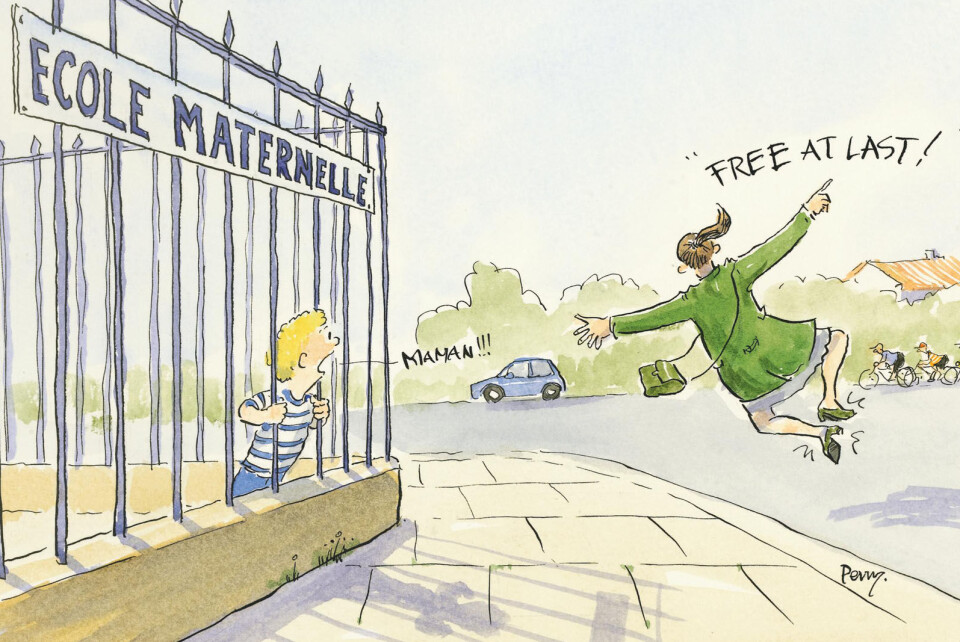
Our main image was drawn for Connexion by artist Perry Taylor.