What are the rules on fitting air conditioning in French homes?
Around one in four homes is now equipped with a system
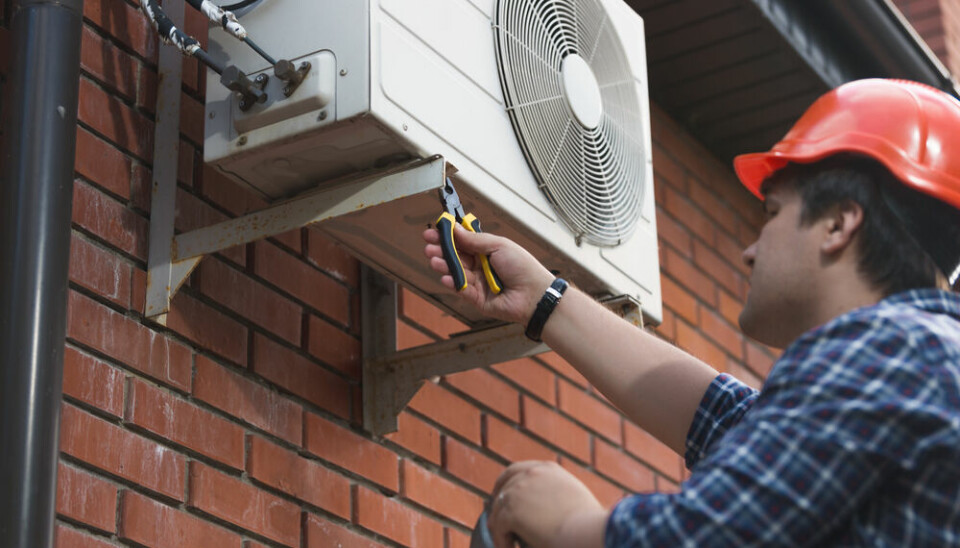
Installation companies and self-employed installers must have proper certification and training to prove their ability to handle refrigerants
kryzhov/Shutterstock
Around one in four homes in France is now equipped with air conditioning, but the systems are subject to a range of planning and environmental regulations.
Installation specialists Clim-Reversible.fr estimate that purchasing and fitting a system typically costs between €700 and €6,000, depending on the type of installation.
Detached houses are more likely to have cooling systems than apartments (31% versus 20%), although installation rates in flats are rising, particularly in cities where heatwaves are felt most acutely, according to 2026 figures from home energy consultancy Hello Watt.
The main rules include:
Declaring the work
Neighbour noise protection
Your new unit must not cause noise annoyance to neighbours. Article R 1334-31 of the French public health code states that noise can be considered “a nuisance” if it is repetitive, intense and/or long-lasting.
Noise below 25 decibels is considered normal for the daytime. However, the public health code states that there is a difference between ‘ambient’ noise and ‘excess’. Noise from the system must not be five decibels higher than ‘ambient’ levels (i.e, higher than 25 decibels) between 07:00 and 22:00, reducing to three decibels above this between 22:00 and 07:00.
The town planning code recommends a minimum distance of three metres between your outdoor unit and other properties, but professionals often recommend even more distance (as much as six to ten metres), depending on the type of system.
If the neighbour complains and your unit is found to be causing noise pollution, you may be subject to a fine.
Installation professionals
A permanent air conditioning system must be installed by an approved professional (with the exception of a monobloc system, which is usually portable and plugged in).
Installation companies and self-employed installers must have proper certification to prove their ability to handle refrigerants, which are associated with multiple risks. For example, it is illegal to install multi- or single-split air conditioners that use certain toxic refrigerants unless you have the correct certification
The RE2020 environment regulations
Since 2022 the ‘RE2020 environmental regulations’ have come into force. These apply to all lighting, heating and air conditioning systems, as well as insulation, and domestic hot water.
These rules aim to better regulate household energy consumption.
They state that:
The total energy consumed by the home (the primary energy consumption, PEC) must fall within the authorised range, which ranges from 0 to 50 kWhEP/m2 per year maximum
A compliant building is known as a bâtiment basse consommation (BBC, a low-energy building).
This limit takes into account the energy needed to produce and transport the electricity. In other words, it means a maximum annual energy bill of around 19 kWh/m2.
To ensure that your new air conditioning system does not cause this level to be exceeded, you must consider the insulation of your home, to ensure that the system is working efficiently.
If the air conditioning system you choose is a heat pump (or a ‘reverse air conditioner’), you may be eligible for certain environmental government grants.
Overall, to save energy, the government recommends that households do not start running their air conditioning system until the temperature outside hits at least 26C.
Air conditioning maintenance rules
Your air conditioner must be regularly maintained to ensure it is safe.
If the air conditioner contains more than 2kg of refrigerant, or its power rating is higher than 12kW, it must be serviced within the first calendar year of installation, and then once every five years. To find out if this is necessary for your air conditioner check its manual or label.
Servicing must be carried out by an approved professional holding a certificate proving they are trained in dealing with refrigerants (the same as the rules for installers).
Again, it is illegal to carry out the inspection yourself unless you hold a proper certificate to prove your training and ability to work with toxic and polluting refrigerants.
In the event of a successful inspection, the professional will issue a ‘certificat d’étanchéité’, which is valid for five years and should be kept in a safe place. This report includes the dimensions of the air conditioning system, its efficiency, any possible improvements or replacements recommended, and comments on its use.
If any faults or malfunctions are found in your air conditioning system, you must not use it, and must instead call in a professional as soon as possible to analyse and address the problem.
Conditioning systems must comply with European Union standards, as they can pose a serious health and environmental risk if poorly installed or not maintained.
These standards were updated in 2013 by the ERP (Energy Related Products) Directive. Notably, they require each air conditioning unit to display a label on it that shows the following:
Air conditioning power in kW
Sound power level in dB (decibels)
SCOP (Seasonal Coefficient of Performance): seasonal efficiency and energy class in heat mode (for reversible air conditioning or heat pump)
SEER (Seasonal Energy Efficiency Ratio): the seasonal energy efficiency value and energy class in cooling mode