






magazine
British entrepreneur continues family estate agency in France after father’s death
Samm Khoury took over Richard Immobilier in 2025

Published
Modified


Samm Khoury took over Richard Immobilier after her father died in 2025, continuing the independent agency he founded to serve international property buyers in south-west France.
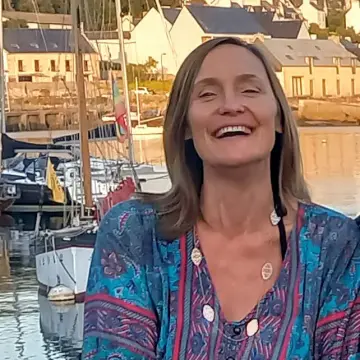
Samm Khoury, 50, is the face of Richard Immobilier, a family-run estate agency based in south-west France.
Named after her father, Richard, who died last year, the business reflects his love of France – something Samm inherited.
“I grew up in a small rural village in Warwickshire before heading south to Brighton for university,” she said.
“After my studies, at the age of 22, I moved to France. I already knew the country well, as my parents had a holiday home near Duras, on the border between Lot-et-Garonne and Gironde. As my mother was an art teacher, we used to spend school holidays in France whenever possible.”
A family business
Samm’s father set up several businesses, from a computer programming company in the 1980s to wine-importing ventures, operating in several countries, including the UK and France.
“I think he just always enjoyed the challenge of starting a new business and developing it,” said Samm.

In the early 2000s, her father was living near Bergerac, in Dordogne, having taken early retirement. He saw a market for international buyers looking for properties and founded Richard Immobilier in 2003.
“He always loved meeting people from around the world and he spoke numerous languages, so it was a good fit,” said Samm, who began working with him after university.
“From the start, my father wanted the agency to be an independent family business providing a personal service, so our clients could rely on meeting the same team, whether at property shows or in our offices.”
From 2015, Samm took on a more prominent role, continuing to run the company along the same lines. She took over fully when her father became seriously ill with cancer.
“My father was the bones of our family, so losing him in 2025 was tragic for all of us,” she said.
“The practical side of the changeover was the easy part. We already had paperwork in place, so we just had to go to the courts to have the estate agent’s licence transferred into my name.”
Running an estate agency in France
Richard Immobilier has always operated as a SARL (société à responsabilité limitée), a French company structure broadly comparable to a private limited company in the UK.
It provides a degree of protection for shareholders’ personal assets against the company’s debts, although this is subject to certain exceptions.
“Besides the practical advantages, I have found that people in France generally regard a SARL as being more professional and more established than if you’re operating as a sole trader,” said Samm. “That helps when building trust with clients.”
The role of an agent immobilier involves spinning a lot of plates, and no two weeks are the same.
“There is a real mix of sales, customer service, marketing, administration, negotiating offers, dealing with notaires and problem-solving.”
The early part of the week tends to be the busiest. Many businesses in France are closed on Mondays, while house hunters want to arrange viewings when they are not at work. Inquiries also come in over the weekend and need addressing at the start of the week.
Weekends tend to be spent catching up on paperwork and preparing property valuations. Much of the job is deadline-driven, with estate agents constantly chasing time, so being well organised is essential.
The advantages of being an international agency
Not being a French-owned business has proved an advantage, said Samm, although she is adamant that some language skills are essential.
She believes French customers, particularly younger generations, appreciate a slightly different approach.
“They view our business as being more globally connected than a small local company where the staff only speak French and will close the door at five minutes to 12 for a two-hour lunch, or maybe longer.
“We bring a different structure to the business, and 75% of our clients are international, meaning that we bring foreign investors who might buy our clients’ homes for a price that locals would turn up their noses at.”
There are disadvantages to running a business in France as a non-native, including high taxes and administrative complexity. But Samm believes that being a foreigner can become part of a company’s identity.
“Being a foreigner can become part of your brand,” she said. “It helps to create a premium image as a company offering international expertise and multilingual services.”


