






news
High turnout expected for major public sector strikes in France
Public sector workers, firefighters, transport and education staff all plan walkouts for September 29
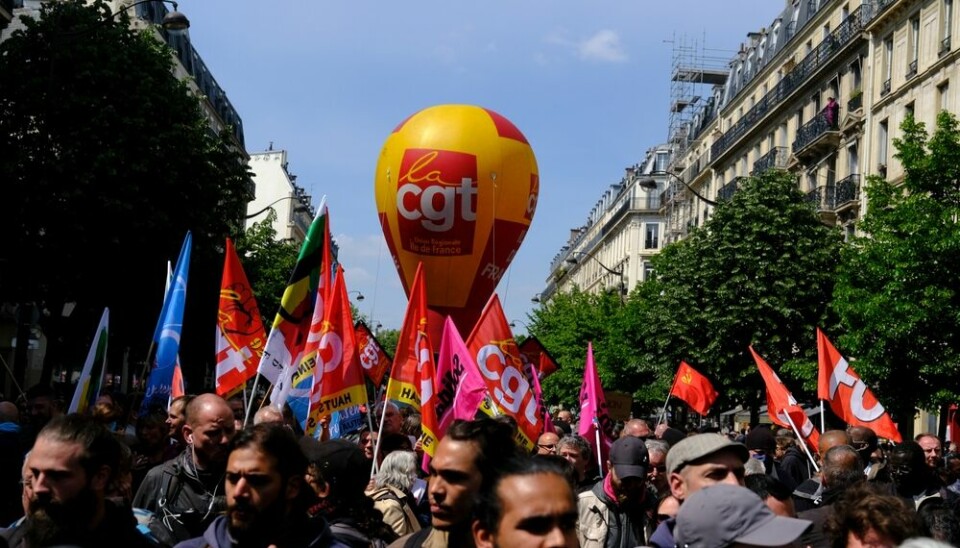


A major day of strike action across several sectors in France on Tuesday (September 29) is expected to see a high turnout, although disruption from the strike may be limited.
France’s eight major unions representing public sector workers – CGT, FO, CFDT, UNSA, FSU, Solidaires, CFE-CGC and FA-FP – have come together to call for the strike action.
This includes teachers, civil servants, firefighters, and hospital staff.
Separately, the SUD-Rail union has called for strike action on the French rail network tomorrow, but is the only major rail union to do so.
The expected walkout figures are not known but are forecast to be high, as this is the first major combined public sector strike since December 2024.
However, many of the services seeing staff walk out (such as tax offices, civil servant-led government offices, etc) have minimal impact on the daily life of residents in France.
Disruption to many residents will therefore be minimal, although parents of school-age children may be impacted by cancellations.
Why is strike taking place?
The strike action has been called by unions over several issues, including low wages amid a cost of living crisis, plans to freeze the point d'indice (essentially freezing public sector wages), and working conditions.
Some sectors also have their own demands, including police officers calling for increases to the risk allowance for frontline staff, and firefighters urging better funding following this summer’s devastating wildfires.
“When we speak to the staff, everyone, without exception, talks about their purchasing power, their salary, and a need for recognition,” said UNSA union member Luc Farré to media outlet Ici.
France’s government is set to outline its preliminary plans for the 2027 budget on Thursday, with unions hoping to put pressure on the cabinet prior to the announcement.
Alongside widespread walk outs, around 155 demonstrations will be taking place across France.
Below, we look at how the strikes may affect you.
Public transport
Rail services are expected to run ‘normal’ or ‘quasi-normal’ tomorrow, with the strike action having minimal impact as only one of the major unions on the rails
No disruption is expected on high-speed TGV trains (both InOui and low-cost OuiGo services), Intercités, or international SNCF services.
Local TER services may be disrupted, but services will remain ‘quasi-normal’ with minimal delays.
If you are travelling tomorrow you can check the status of your train on official SNCF websites (national or local) from 17:00 this evening.
In Paris, services should run as normal on the metro, buses, and trams, with minor disruption to the RER C, RER D, RER E, and suburban lines R and V.
There are no other major disruptions expected on public transport networks in other cities, but it is worth checking local websites on the day for disruption to buses, metros, or trams.
Teachers
The number of demonstrations taking place is comparable to the last major public sector strike in December 2024.
This saw up to a third of teachers walk out (some 40% in primary schools, 23% in middle and secondary schools).
It is unclear if similar numbers will act tomorrow – teaching staff have held several strikes of their own since December 2024 – but there is a possibility of disruption.
Exact figures will not be known until Tuesday, but schools should inform parents about disruption no later than this afternoon if there will be closures due to strikes.
As a reminder, primary schools have minimum service rules in place and will always accept pupils during schooling hours.
If 25% or more of teaching staff go on strike, the commune where the school is located must assure pupils are cared for, even if the school will not run planned lessons.
Authorities must still accept all pupils, and look after them for typical schooling hours (either at the school or a local building such as the mairie etc if this is necessary).
Middle and secondary schools (collèges and lycées) have no such rules in place – if facilities are closed due to a lack of staff then parents must make alternative arrangements for their children.
Public hospitals
The unions representing staff at public hospitals have called on workers to join Tuesday’s demonstrations.
Minimum service rules mean hospitals will not reject patients arriving in an emergency with urgent care required, but non-medical acts such as paperwork may not be completed tomorrow.
Non-urgent appointments may be cancelled for outpatients, including check-ups.
If you have an appointment at a public hospital scheduled for tomorrow, call the corresponding clinic today to see if the appointment is still going ahead.
Public services
The brunt of disruption will come from the various public services offered in France, with many staff members expected to walk out.
This includes tax offices, France Travail centres, mairies, France Services centres etc.
Offices for local public services are likely to be closed for walk-ins, and scheduled appointments may also be cancelled.
If you are planning a visit to one of these centres, it is advised to delay this to another day. If you have an appointment scheduled, you should check today if it will be disrupted.
Firefighters
French firefighters are conducting their own strike action throughout September and October, but have emphasised tomorrow as a key day of action.
In addition to the cost of living crisis, pompiers are also highlighting a lack of funding for services, particularly for fighting summer wildfires.
Firefighters are also covered by minimum service requirements, and they will not refuse any callouts. Many are expected to join demonstrations.
In Paris, firefighters will organise their own march – distinct from the wider union movement – before converging with the other demonstration.
Police
Some police officers will demonstrate over wages and working conditions, including seeking an increase to the risk allowance for officers, and a recruitment drive.
Minimum service requirements however mean disruption is not expected keeping a police presence across the country, particularly where demonstrations are planned.
Note that a special 1948 law prevents police officers in France from striking, but not from joining unions or demonstrating.
Are more strikes expected? Is there a risk of a general strike?
Unions have so far only called for strike action on September 29, and limited this to public sector staff.
However, the breadth of support for the strikes and demonstrations – it remains rare for all major unions, from the militant CGT to the reformist CFDT, to agree on united action – could lead to further action.
On days of major strike action, unions typically wait to assess attendance figures before calling for new strikes, to assess wider support.
During the most recent inter-union demonstrations in December 2024, the CGT claimed 200,000 people attended strike action, with the interior ministry claiming 130,000.
This time the government’s budget is also expected to influence future strikes – if unions are dissatisfied with the budget, or worse find it unacceptable, further autumn action is almost certain.
The cost of living crisis risks a wave of public anger in addition to union action.
Unions may call for workers in the private sector to join demonstrations, similar to protests against the 2023 pension reforms.
There is also a planned renewal of gilets jaunes (Yellow Vests) protests across France in October, which could leave authorities stretched if several major demonstrations take place both during the week and at weekends.


