






news
Calls for new ‘gilets jaunes’ protests in October on social media
New round of protests may impact 2027 presidential election
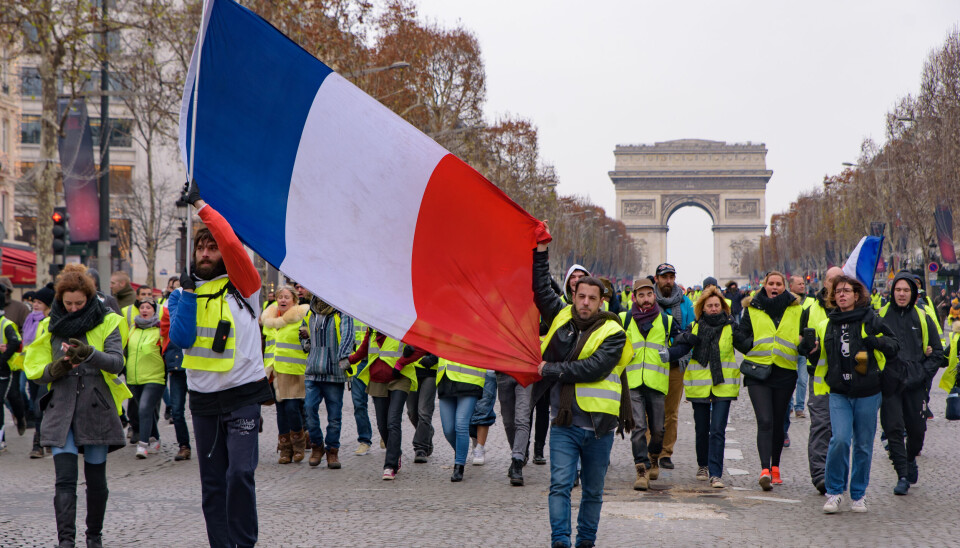


Is France set for a return to the gilets jaunes (yellow vests) protests?
Several social media posts calling for a new round of the national protests have been circulating, leading authorities to investigate.
The call to arms, spurred on by a cost of living crisis and climbing petrol costs, are remarkably similar to the original issues that sparked the initial wave of protests in 2018.
An initial nationwide protest seems scheduled for October 17 – the original protest started on November 17, 2018 – with this date marked on the majority of social media posts.
This seems to suggest the new wave of protests are to be coordinated nationally for maximum disruption.
The protests – if they reach the level of disruption and intensity as in 2018/2019 – may have serious implications for the upcoming 2027 presidential election.
‘Yellow vests’ plague president
A spectre is haunting President Emmanuel Macron, and it is shrouded in a yellow vest.
The president faced a seismic challenge less than two years into his tenure, when the gilets jaunes protests exploded across France at the end of 2018.
The protests, initially called for over the high cost of living and in particular fuel prices, quickly gained momentum across France, with social media used to instigate hundreds of local cells.
The first official protest (dubbed ‘Act 1’) in 2018 saw 300,000 people take to the streets, with calls for protests each Saturday after this.
The movement was notable for the unifying sign of the gilets jaunes themselves, the mandatory safety vest required in French vehicles.
Initially used because all drivers have access to the jackets – making it a cheap and accessible item for protesters to mark themselves with – the jackets were imbued with symbolism.
Their association with drivers reinforced the underlying anger over fuel costs, and the ties of the jackets to working-class industries firmly planted the protests as a populist movement backed by the labouring class.
This placed the movement in contrast to the more academic Nuit debout protests earlier in the decade, which saw people come together to discuss socio-economic and ecological issues in evening debates in public squares.
In contrast, the gilets jaunes blocked roads and clashed with police officers, becoming increasingly violent as the weekly protests continued.
Protests quickly spiralled from being focused on drivers to becoming widely anti-establishment, with a focus on the tax burden the working class and rural communities faced.
The movement was also highlighted for its decentralised nature – unlike many other prominent protest movements in France, it was not led by unions or a political party but instead was a grassroots movement.
At the height of the protests in early December, armoured vehicles were deployed in Paris to protect the presidential palace.
The president made a televised speech on December 10 – the most widely-watched address in French history at the time – announcing a series of reforms including increases to benefits and the minimum wage, a freeze on taxes for overtime hours, bonuses, and on pensioners.
Protests continued into 2019 but were increasingly less intense, and were stopped in 2020 due to the Covid-19 pandemic.
For president Macron, the return of the protest at the end of his tenure would cast a symbolic shadow over his two terms.
Despite a list of major changes to France – including constitutional changes – it would point to a France that remains roundly dissatisfied with daily life.
Will protests impact presidential election?
The potential return of the protests could see a bubbling cauldron of anger explode.
France is a nation that has protest and rebellion woven into its DNA, but has seen a relatively quiet few years.
Major protests over the 2023 pension reform saw millions take to the streets to protest, ultimately unsuccessfully, to stop the bill.
Unions have called for several days of national strike action since, but none have reached the levels of support nor disruption that the gilets jaunes movement achieved, nor concessions from the government.
If the movement comes back in its original form – grassroots, accessible, and angry – it may cast a looming shadow on the upcoming presidential election.
Opposition parties will have to tread carefully between supporting protesters that may employ violent and disruptive means, or alienating a potentially huge voter base.
The original gilets jaunes protests were apolitical, but supported by populists on both the left and right (though criticised by moderates).
With the far-right Rassemblement National currently steaming ahead in the polls, and the far-left La France Insoumise in the running for second place, the movement – or responses to it – may sway voters into the arms of the extremists.
Communist Party leader and 2027 candidate Fabien Roussel has come out in support of the movement.


