


MORE FROM THE CONNEXION




Subscribe to The Connexion
See prices & plans
HELP GUIDES

Income Tax in France

Healthcare in France

Inheritance Law and Wills in France

Visas and residency cards for France
Subscribe to The Connexion
See prices & plans
HELP GUIDES
Income Tax in France
Healthcare in France
Inheritance Law and Wills in France
Visas and residency cards for France
Birttany Ferries now applies an 'ETS surcharge' on tickets to help recoup part of the costs
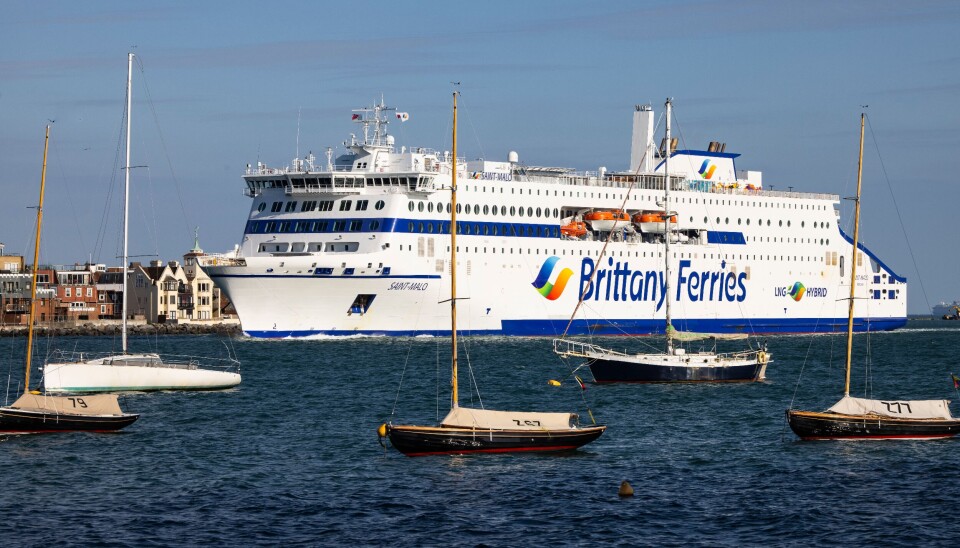
Cross-Channel ferry operators face new and mounting EU climate charges, sparking concerns over fares, routes and future investment.
Brittany Ferries said the rising cost of the EU’s Emissions Trading System (ETS), which now applies in full, was a key factor behind a series of “difficult decisions” and adaptations.
These include closing the Poole-Cherbourg route from November and Portsmouth-Le Havre from October, and selling two conventionally-fuelled ferries, Cotentin and Barfleur.
The firm, which is now applying an ‘ETS surcharge’ to tickets to cover some of the costs, said that, despite investing in what it says is the “cleanest, greenest fleet on the Channel”, it faces an ETS bill of €27million this year “with no allowance for the industry-leading investment already made”.
It is also still repaying half of a €117million state-guaranteed loan to help it survive when passenger numbers collapsed in the pandemic.
It says it will compensate for the Poole-Cherbourg route with sailings from Portsmouth to Cherbourg.
The CFDT union has criticised the closures, saying they will hit jobs and Normandy tourism as “these routes are major entry points for numerous British visitors”.
Several readers told The Connexion about the impact the closures will have on their lives.
One said: “We are very upset that the Poole-Cherbourg route is to be discontinued. We live in western France with family in Dorset.
“The UK traffic is a nightmare compared to driving in France, so the Cherbourg-Poole route is perfect for us.”
Another said Portsmouth-Le Havre is “really convenient”, adding: “It is so much easier to use than the trip, and traffic and delays, for Folkestone and Dover. Le Havre gives easy access to almost all of France.”
Ferry industry body Interferry has criticised the ETS scheme, which has been phased in for large ships calling at EU ports since 2024.
The scheme, which also covers power generation and heavy industry, requires companies to pay for their greenhouse gas emissions.
Each year they must submit an independently audited emissions report and buy enough carbon allowances to cover their emissions. The money raised is used by EU countries to fund climate and energy projects.
Earlier this year, Interferry’s director of regulatory affairs, Johan Roos, called for the phase-in stage to be paused.
He argued that road transport remains exempt while ETS revenues paid by shipping are not ringfenced for the maritime sector.
He warned that if ferry prices rise significantly freight customers may switch to road haulage via the Channel Tunnel, increasing congestion.
“This exemption of road transport creates an immediate, severe competitive disadvantage for roll-on, roll-off [freight] and passenger ferries,” he said.
The European Commission proposed changes in mid-July including allocating ETS allowances to firms investing in EU-approved green fuels, hydrogen and clean propulsion technology (such as electric or wind-assisted), so as to help them offset the additional costs.
The proposals – which will now be debated by the EU Parliament and Council – also say countries should invest 50% of their ETS revenue in industries that pay into the scheme.
Mr Roos told The Connexion it was too early for a full assessment but, referring to the proposed support scheme, said: “We note that they do indeed recognise the need to provide more support to decarbonising the ETS sectors, but the absolute level seems to be very low compared to what is being paid in by our members.”
Interferry estimates the proposed support would amount to about 10% of the value of the ETS payments made by its members.
“The onus thus falls on the member states to ensure that their respective ferry infrastructures remain viable.”
He added: “Our members pay in around €1bn per year, money that is dearly needed to decarbonise the fleet.
"That's why the revised ETS must significantly increase how much comes back to our sector: both from Brussels and from the member states.”
The ETS system applies to 50% of emissions from trips starting or ending in the EU and 100% of those between two EU ports.
Only 40% of relevant emissions required allowances for 2024 (paid in 2025), 70% for 2025 (paid in 2026) and 100% for 2026 onwards (paid in 2027).
The UK has also established its own ETS, which has applied to shipping since July 2026.
At present, cross-Channel ferries are only liable for emissions while in UK ports, but it is proposed that this be extended to 50% of emissions from cross-Channel trips, mirroring the EU scheme, from 2028 if approved.
Brittany Ferries has invested in some liquefied natural gas (LNG) and LNG/electric hybrid ships, which can plug into shore power in port.
However, any potential savings may have been outweighed by the phased expansion of the EU ETS scheme.
We note also that methane emissions from LNG-powered ships were also brought into the ETS from 2026, although sustainably produced biomethane is treated differently under the rules.
Brittany Ferries has started making some use of biomethane and says it plans to increase this.
P&O did not wish to comment directly on ETS but said ecological factors are important to its strategies.
“We have introduced the only hybrid ships on the Dover-Calais route – our two new Fusion Class vessels, P&O Pioneer and P&O Liberté.
These emit 40% less carbon than traditional vessels and can adapt to operate entirely on battery power when adequate shore power is available.
“We also pioneered the use of biofuel on our Pride of Hull vessel in 2025, which operates on the Hull to Rotterdam route.”
DFDS said it is studying the latest ETS proposals and will comment further in due course.
Asked if the fees could lead to cuts, its spokesperson said: “As to your question about future plans for restructuring, we will, as is compliant for a publicly listed company such as ours, always inform the market in a timely manner, if we have anything to announce.”
The EU says maritime transport is one of the most energy-efficient ways to move people and goods, but it remains a significant and growing source of greenhouse gas emissions.
It warns that if shipping emissions continue to rise towards 2050, they will undermine the Paris Agreement's goal of limiting global warming to below 2C above pre-industrial levels.
The EU also believes that less reliance on fossil fuels will help European companies remain competitive in times of geopolitical uncertainties, when future supplies of these fuels may be uncertain.


