






reader experiences
“In Douarnenez everyone plays music": how one man from Texas opened a music shop in Brittany
The shop in Finistère is a delight for music lovers

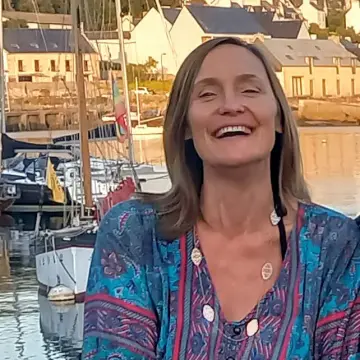
Published
In Douarnenez, Finistère, a town famous for sardine fishing, you might be surprised to come across a music shop with a Breton name owned by a Texan.
Ti An Trouz roughly translates as ‘house of noise’ and it is a paradise for music lovers.
“Before moving to France in 2017, I lived in Austin, Texas” said Jeffrey Luna, 49.
“I worked in retail electricity until 2012, when I quit to focus on music.
“In the US, you really have to hustle to make a living: I was in four bands at the same time, playing three or four times a week, I produced and engineered records, made scores for films and advertisements, and was also a handyman and a landlord.”
In 2014, Jeff visited France for the first time to walk the Chemin de Saint Jacques de Compostelle. Along the way he met his future wife, who is French.
“I came back to visit several times and finally decided to move here permanently in 2017.”
Moving to Brittany
The couple were initially based in Saint-Denis, north of Paris, and were happy there, but did not like the idea of starting a family in a big city.
They looked around and eventually bought a house in Douarnenez, in west Brittany.
Initially, Jeff struggled to make a living in France, particularly as his French was not yet of a high enough standard to make an impression in job interviews.
“I tried various options, even selling breakfast tacos at the farmers’ market, but I couldn’t convince the French to eat something salty and spicy in the morning!
“Eventually I decided to start a music shop similar to my favourite shops in Austin and New Orleans, and Ti An Trouz opened for its first customers in 2022.”
Setting up the shop
Jeff found and bought a building that matched what he was looking for on one of the main streets of Douarnenez, a seaside town of around 14,000 residents.
Using funds from earlier property investments, he got a good deal as there were few businesses open on Rue Jean Jaurès at the time and property prices were low.
He invested his own savings (“a lot of money”) and around nine months of his time remodelling the building and ordering stock.
“Thankfully, the bureaucracy wasn’t as bad as I feared,” he said, “and actually the people I spoke to along the way were pretty helpful.
“The main obstacle for me was getting over the doubt that it might not work after all that effort. Luckily, it’s been great so far.”
Jeff opted for micro-entrepreneur status: “I like that it’s simple and doesn’t require an accountant, but even so, it’s a tough market.
Making the market your own
“If you have to compete directly with online retailers you won’t last long.
“Here, I try to stock great brands that aren’t sold on the websites of major retailers, and I also have a lot of second-hand instruments.”
However, in order to sell used instruments you need to know how to fix them, so Jeff has had to learn electronics and basic skills to repair stringed instruments such as violins, guitars, and cellos.
There is no specific insurance covering his repair work, so he avoids anything unless he is completely confident he can repair it.
He now spends around 25% of his time working on instruments, whether they are new arrivals that need to be set up for sale, or repairs for clients.
He spends another 20% arranging the instruments, entering them into the system and putting stock in place, 15% choosing and ordering stock, 10% cleaning and tidying, and 10% on communications concerning sales, either with clients or distributors.
“The remaining 20% I probably spend playing music, which is not a bad percentage,” he said.
Being a native English speaker comes in handy given that Jeff’s business is located in a popular holiday town.
“Now that my French has improved, I can communicate with almost everyone who comes into the shop,” he said.
What life looks like now
“Looking back on my life in Texas, I couldn’t imagine setting up a music store in somewhere like Austin. There are already so many and the costs are a lot higher.
“For my business to succeed, it was necessary to have an isolated market full of potential clients.
“In Douarnenez everyone plays music and there’s a strong desire to shop local.
“In addition, I own my building and my stock outright; I don’t have any loans.
“To be absolutely honest, if I had to pay monthly instalments on a loan or rent then the business wouldn’t be viable.”
Aside from income tax and social security contributions, owning the building means paying property taxes of around €1,100 a year.
He advises readers who are thinking about launching a similar venture in France to save around €50,000 to cover the stock needed to set up a shop.
“In terms of revenue, running your own music shop is not exactly a big earner. I make a little above the French minimum wage, which is around €1,400 a month net.
“It’s fun though, and happily you don’t need a whole lot of money to live in Douarnenez!”


