






working in france
French firms hiring fewer young people due to AI
Calls for the workplace to integrate new recruits alongside tech

Published
Modified


The growth of artificial intelligence (AI) software has led to fewer young people being hired in France, with HR managers warning the issue needs urgent debate.
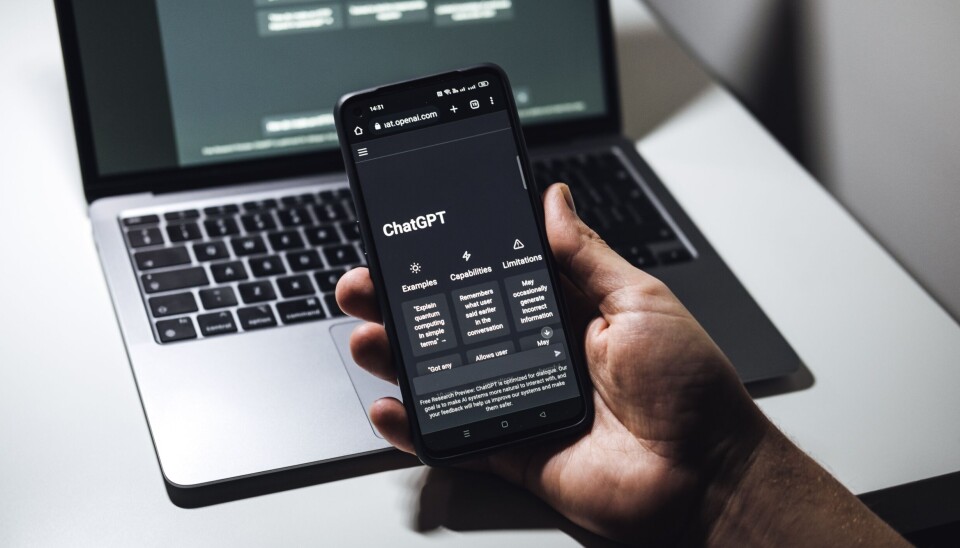
Since ChatGPT launched in November 2022, it has been followed by other generative AI chatbots, all promising to answer questions, explore ideas, write content, and analyse information when given prompts.
A decline in hiring young people
A study by the Association Nationale des Directeurs des Ressources Humaines (ANDRH) this year showed that 10% of companies said they had already reduced the number of young people they hired as a result.
“That figure really stood out,” said Audrey Richard, association president and head of human resources at Canal+ media company.
“Especially as another 23% of companies said they were thinking of hiring fewer young people.”
Another report, published in October by the Laboratory for Innovation and the Future of Work at HEC business school, said that in occupations most exposed to AI, permanent hiring among 21-29-year-olds was 28.3% lower in March 2026 than in November 2022.
Interpreters and translators, journalists, and economic, financial and business research managers are among workers it considered most vulnerable.
In many cases, ANDRH found that firms had invested in AI, and then stopped hiring to force current employees to use it for simple tasks formerly handed over to new hires or people on work experience.
ANDRH said that any attempts to ban the use of AI in the workplace were unlikely to succeed, and that doing so would not be desirable as it can improve worker efficiency. Instead, it called on companies to look at how they integrated young employees.
“This existing situation is terrible for their morale and is not in the long-term interest of businesses,” Ms Richard said. “How will they replace their experienced teams if there are no youngsters coming up behind them?”
The study also found that around 41% of firms have not redefined the expected path of young recruits to take into account the use of generative AI.
Impact of AI in the workplace in France
Overall 63% of French companies have already formally given employees generative AI tools, although it is thought a lot of workers were already unofficially using them.
Around 37% of companies have introduced AI in a general manner, and 26% for specialised tasks, while 20% said they were running pilot schemes.
“This technology is not a subject to be considered at some point in the future, but an operational reality for the large majority of companies,” said the ANDRH report.
It added that only 8% of companies thought they were using generative AI well, while 26% thought the tools were badly used or hardly used at all.
Two-thirds of firms that had adopted AI reported that young employees were the most likely to use it.
Just over a quarter of young employees worried their jobs might be threatened as the use of AI grew, and 15% said that using AI increased pressure from bosses to get work done faster.
Ms Richard called for collective action from businesses, individual managers and the government to expand the debate over the use of generative AI.
“We must create employment paths to enable young generations to find their place next to AI, and not use it to replace them,” she said.


