Are French weather forecasts being manipulated as part of a betting scam?
State forecaster files complaint over data tampering, after gamblers win thousands following unusual records
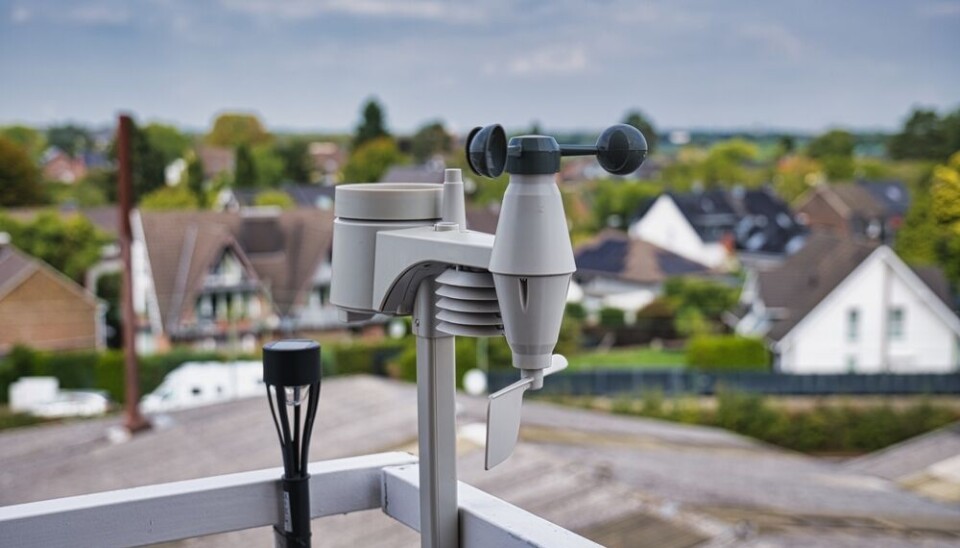
The weather sensor may have been tampered with to produce false data, seeing some gamblers win big. Photo for illustrative purposes only
015_EARTH/Shutterstock
French state weather forecaster Météo France has filed a complaint with the nation’s public prosecutor over potential tampering of one of its weather station sensors.
Several French media outlets link the manipulation to the American online betting market ‘Polymarket’, which allows betting on any possible criteria.
The link came after outlets discovered gamblers won up to $14,000 and $20,000 on separate occasions from predicting the unusual weather patterns.
The state forecaster did not officially make this link in its report, however.
It has led to wider concern over the potential accuracy of weather forecasts and information supplied by state bodies, which could be manipulated to benefit certain financial agendas.
The forecaster’s staff previously went on strike over the use of automation tools in forecasts leading to inaccurate reporting.
Temperature changed with portable hairdryer?
“Based on physical observations of one of our instruments and the analysis of sensor data, Météo France has filed a complaint for tampering with the operation of an automated data processing system,” said the forecaster yesterday (April 23).
It relates to a sensor at the Paris Charles-de-Gaulle airport, which recorded anomalous temperatures on the dates of April 6 and April 15.
On these two dates, the sensor recorded temperatures that changed by up to 5C or 6C within an hour on separate occasions, pointing to potential manipulation.
Media outlets report this may have been carried out by a device such as a battery-powered hairdryer used near the sensor to inflate temperatures.
“We can imagine that someone with a good understanding of how the sensors work intervened,” said meteorologist Ruben Hallali to BFMTV.
Météo France also filed a report with the Charles de Gaulle gendarmes over the tampering, framed as a security risk for the airport.
Bets on everything
Polymarket is one of several increasingly popular ‘prediction market’ betting websites, which allow users to bet on essentially anything.
Previously limited largely to cryptocurrencies, in the last two years they have become part of a wider betting network and backed by billions of dollars of bets.
Systems work by a user offering a bet on something happening, but unlike traditional gambling this is not limited to sports or casino games.
Bets can include for example, the president wearing a certain coloured tie at an upcoming event, the number of tickets sold for a concert, the results of an upcoming election or even what a TV chef will make for lunch on her live show – literally, anything can be turned into a potential bet.
Other users can then place bets on a different outcome, with further gamblers adding their own options or backing a pre-existing choice.
These untraditional betting rings have been criticised for possible manipulation, either from gamblers placing bets with inside knowledge on events or those altering real-world events that people have placed bets on.
Polymarket and other similar websites are banned in France but even if users cannot access them from the country, they can still make bets on things that happen in the country.
Since the announcement of the complaint, bets on Polymarket for the recorded temperature at the Charles de Gaulle station have closed, but have opened for the nearby Le Bourget airport.
Erosion of belief
This kind of manipulation raises concern about the authenticity of weather station reports, and that an insider could provide intentionally false information for financial benefit.
As Météo France is a state body, it is often seen as the authority in its field but if its data can be manipulated, it risks losing its legitimacy and status as unbiased.
In terms of weather forecasts, inaccurate reports could lead to dressing inappropriately for the weather in less serious cases.
In more serious cases they could impact responses to natural disasters or extreme weather, both for homeowners and farmers.
The risk of an erosion in belief of public service messaging would only make it more difficult for official bodies to provide information, at a time where the rise of AI and social media have already eroded public trust in official sources of information.