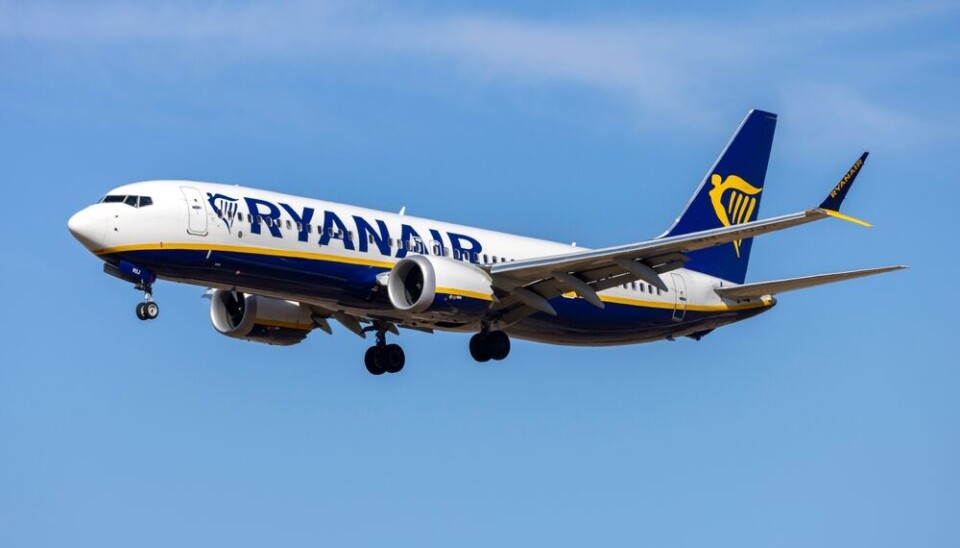
Low-cost airline Ryanair says it only has jet fuel supplies guaranteed until the end of May, as the aviation industry begins to prepare for a summer of difficulties caused by shortages.
The airline is warning that it may need to cut flights from its peak season schedule if supply issues continue, an increasingly likely scenario if the Strait of Hormuz remains closed and conflict in the Middle East continues.
"Nobody knows what will happen. At the moment what seems clear is that if the war ends at the end of April or beginning of May, there will be no problems with fuel supply during the summer, but if it continues we don't know," Ryanair chief Michael O’Leary said at a press conference this week reported by Il Sole 24 Ore, Italian financial newspaper.
While Europe generally has around eight weeks of jet fuel stockpiled at any given time, the lack of supply from the strait – which represents around 40% of the continent’s total imports – means resources are becoming scarce.
Several airlines risk cutting flights to save dwindling fuel supplies and hiking prices to absorb extra costs.
Previously noted as an either/or scenario, industry experts are now warning of a double whammy of cancellations and price increases impacting summer travellers.
A number of warnings have been made over the risk of Europe running out of jet fuel, or having to implement emergency plans to retain fuel for priority services.
At the same time however, other senior figures in the airline industry have said cancellations to busy destinations are unlikely across the May - July period.
Uncertainty after May – Ryanair
Mr O’Leary explained the financial impact the conflict has already had on the airline, and the future costs it could entail for them.
"The war has already cost us $50 million more in fuel in April alone. If it continues and the price stays at $150 a barrel, within a year this could rise to $600 million," Il Sole 24 Ore quoted the Ryanair chief as saying.
While many European airlines tend to ‘hedge’ jet fuel – signing fixed-price contracts covering several weeks or months in advance – many are now buying at market rates without signing longer deals.
The strategy behind this is the hope that an end to the conflict and resumption of normal flow of supply will see prices quickly drop, avoiding airlines from overpaying.
If the conflict is prolonged, however, it risks prices climbing higher and higher as supplies dwindle.
Mr O’Leary also said that low-cost rivals who operate on razor-thin margins risk bankruptcy this summer, as lenders would be unwilling to offer cash flow to help them through the period.
"If oil stays at these levels, two or three European airlines in October or November could go bankrupt," the Ryanair chief said.
Slow deterioration, not chaos
The scenario of lower-than-usual supplies would not lead to total and sudden chaos, Mr O’Leary said, but a gradual deterioration of services.
Some markets, including the UK, are already seeing a subtle strain on the aviation network due to fuel supply issues.
Major hubs and airports would almost certainly continue to receive necessary jet fuel for all planned flights, but smaller airports may suffer, lower down on the priority list for accessing resupplies.
Schedules may be ‘trimmed’, for example if an airline runs several flights between two destinations per day it may choose to cut one of these, or fly to smaller airports less regularly.
Passengers are also expected to see rising prices to compensate for the more expensive fuel on flights that continue to operate.
For his part, Mr O’Leary said prices will rise by around 3%, but advised holidaymakers to book as soon as possible to avoid any further rises later in summer.
Controversially, he suggested that a lack of jet fuel causing a last-minute cancellation for a flight would class as an ‘extraordinary circumstance’ and leave passengers without the option to apply for additional compensation under EU rules.
"If the war ends in April or early May, then there is no risk of cancelled flights, but if the flight is cancelled because there is no fuel at the airport, there are not many solutions. People are waiting to see what happens, I recommend booking because it might be too late."
Mr O'Leary said that 10%-20% of the airline's fuel supply was at risk, adding that "none of us know for sure."
He added: "And in any case, even if the war ends tomorrow, it will take at least three or four months to return to normal."
Is it all doom and gloom?
There is the possibility – low, but not completely unfeasible – that the strait reopens before the end of May, bringing a backlog of jet fuel and oil supplies to global markets and allowing typical resupplies to resume.
If this is the case, European airlines will quickly re-sign hedging contracts to lock in dropping prices, and fears of summer shortages will reduce, with only minimal impact on travellers.
Even if tensions cause the strait to remain closed, not all holidaymakers will be affected.
Several airlines advise those who know their travel plans to book as soon as possible to lock in rates before prices increase.
“For the vast majority of destinations that people travel to, whether for leisure or business, they should be quite confident they can book,” said former Ryanair and Monarch commercial director Tim Jeans to BBC Radio Scotland.
“The airlines, particularly the holiday airlines, have got very robust bookings for May, June and July. I don’t really see a possibility that… somebody booked to go to Majorca or Malaga is going to find their flight cancelled.
“There may be some trimming of schedules which might mean a flight time alteration, but are they going to see their flight cancelled altogether? I think not,” he added.
More widely, the sector is looking to adapt to the crisis, with several major changes already underway.
The EU is looking at plans to reserve and better handle jet fuel across the network, and there are pushes for ‘Type A’ jet fuel from the US – currently banned on the continent – to be temporarily authorised.
Supply chains are realigning in light of the crisis, with higher supplies of all jet fuel types coming from North America.
“I’m not saying there is no problem, that would be foolish to say that, but I think it is fair to say most airlines will be confident they could uplift enough fuel to fly the programmes they plan to fly," said Mr Jeans.