Paris mayoral election March 2026: Who are the main candidates?
Safety issues, parking fees, and social housing are among the major campaign issues for the vote
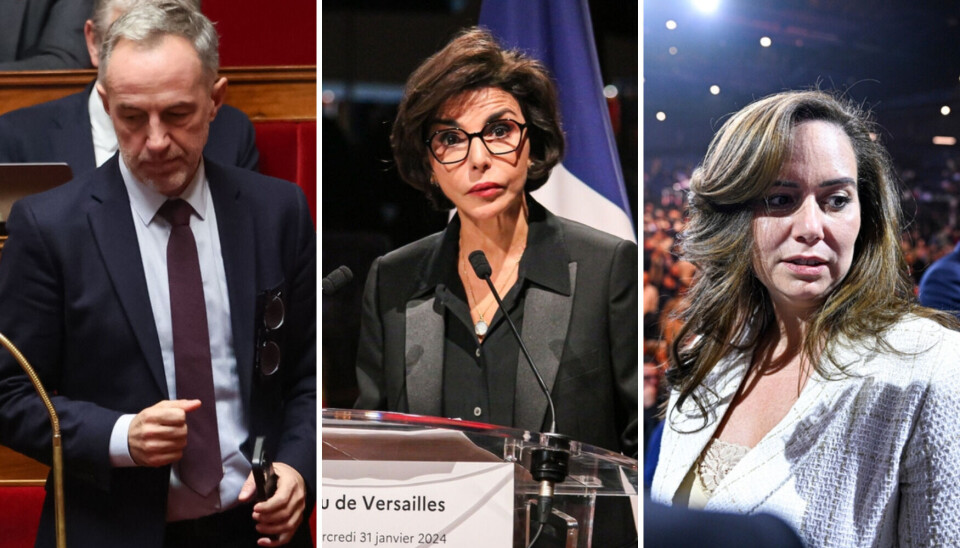
Parisians head to the polls this Sunday with a raft of political choices. Photo shows mayoral candidates Emmanuel Grégoire, Rachida Dati, and Sarah KnafoVictor Velter / ToninT / Shutterstock
Zane LilleyZaneLilleyEditorial Team - The Connexion
Parisians head to the polls to elect councillors and ultimately a new mayor on March 15 and 22, as current leader Anne Hidalgo is not seeking a third term after 12 years at the helm.
Mayoral candidates head a ‘list’ consisting of prospective councillors, with voters opting to back all members of the list through their vote.
A quarter of overall council seats are handed out to the winning party, with the rest divided between parties who reach a 10% threshold in the final round of voting.
These councillors then vote in the city’s mayor after the election has taken place, with the candidate of the ‘list’ with the highest number of seats being elected by the chamber.
The mayoral candidates all widely agree on some key policies including better lighting in public spaces to protect women, improving pedestrian safety, and keeping (or making) Paris greener. Below, we look at where they differ and their backgrounds.
Emmanuel Grégoire is hoping to be the third consecutive Socialist mayor of the city, following Anne Hidalgo and Bertrand Delanoë.
He is a former deputy mayor of the city who left his post in 2024 to run as an MP in the snap legislative election. If he succeeds, it will strengthen the party’s grip on the city, which they have managed since 2001.
Mr Grégoire has managed to – for the first time ever in Paris – gain the backing of the Greens and Communists in a wider alliance, with these parties withdrawing their own candidates in favour of the Socialist.
He has publicly fallen out with predecessor Mrs Hidalgo, mostly due to leaving his former post, which poses a mixed bag.
Her negative comments on his lack of political prowess – she has said he is not strong enough to hold the role – may affect voter perception, but he can also distance himself from the increasingly unpopular mayor.
At the same time, as the continuity candidate after her tenure he can position himself in relation to popular and successful policies of the last few years such as cleaning the Seine river and reducing pollution across the city.
This also opens him up to criticism from opponents over less popular policies of the Hidalgo era, including higher property tax bills, mounting debt and city expenditure, and policies deemed anti-car by some drivers.
He promises to largely continue the more successful policies of Mrs Hidalgo, with a push for more social housing, limiting short-term rentals, and converting unused office space into rental units.
He also promises to improve public transport, greenify the city with parks and other green spaces, improve integration of the border areas of Greater Paris, and reduce the risks of overtourism in the city.
Rachida Dati – Lés Républicains/MoDem
Hot on Mr Grégoire’s heels is Rachida Dati, currently mayor of Paris’ seventh arrondissement (each area has its own mayor that sits on the city council and deals with affairs local to the area) and until recently the Culture Minister.
A long-term critic of the Socialist control of Paris, Mrs Dati is running her third mayoral campaign, based on a cleaner, safer city.
She has the advantage of being the only candidate with a household name in French politics.
The right-wing candidate has gained the support of MoDem, a centrist party that is part of President Macron’s centrist alliance.
This has given her extra support, but not the full backing she was perhaps hoping for after working with the wider centrist groups in cabinet.
She is a combative and controversial figure, both to her advantage and detriment, and has gone viral for her social media posts in the run up to the election where she confronts drug users and migrants in the city.
A black mark against her name is an upcoming court case in September 2026 for corruption, after she was alleged to have illegally lobbied for Renault-Nissan when working as an MEP as well as a consultant for the vehicle manufacturer.
She is also being investigated for other issues including an alleged failure to declare a jewelry collection when Culture Minister (all ministers must declare expensive items).
Main campaign promises include more municipal cleaning workers and a drive to clean up Paris’ public places, a new squad of 5,000 armed municipal police to patrol the city and engage in ID checks and crime prevention (including petty crime), and doubling the number of CCTV cameras.
She is critical of a requirement for the city to offer 25% of properties as social housing, and will look to overturn this (although it is a national stipulation).
She also plans to end the ZTL or limited traffic zone in the city centre and tighten city spending.
Pierre-Yves Bournazel – Horizons, Renaissance
The candidate backed by the remaining centrist parties, Mr Bournazel has spent close to two decades on Paris’ city council.
Unlike other candidates, his entire career has been focused on Parisian politics, which he is using to promote himself as entirely dedicated to the city.
His lack of name recognition – earlier polls last year showed more than half of Parisians did not know who he was – is a blessing and a curse.
He is also unlikely to receive much assistance from the presidential camp despite the official Renaissance backing, as Horizons leader Édouard Philippe (Mr Bournazel belongs to the party) publicly called on Emmanuel Macron to resign last autumn.
Due to his relatively unknown nature, eyes may be drawn to other candidates on the list.
However, if – it is a big if based on the polling data above – Mr Bournazel polls in the top two places, this inconspicuous nature may help gain voters from smaller parties who drop out or opt to ally with him
A centrist candidate who swings slightly to the right, he would be a palatable choice for non-extremist voters from either flank.
His campaign includes 10 key promises, including 60,000 new social housing units, improving eco-renovation of properties, recruiting more police officers, improving bus schedules, and using money from the sale of the Parc des Princes stadium to build new, free, underground parking in the city.
Sophia Chikirou - La France Insoumise
Failing to agree on a far-reaching left-wing alliance, the far-left party is running its own candidate.
Despite strong support in the Parisian suburbs (constituencies that many of the party’s MPs represent) and the city’s north-east, the party is unlikely to come top within the city itself.
However the party has proven strength in campaigning – the 2017, 2022, and 2024 elections saw the party or its alliances perform well above where early polls placed them – and she is hoping a strong turnout among her core base in the city (working class families, younger voters who have moved to Paris, immigrants, etc) will propel her into the second round.
Miss Chikirou is another controversial candidate, due to her relationship - romantic and otherwise - with La France Insoumise talisman Jean-Luc Mélenchon.
She is accused of overcharging the party for a campaign communications role in the 2017 presidential election. She was also recorded using a homophobic slur against employees in a media group she was working with in 2023, and rarely gives interviews.
Offering to return all municipal services back to local control, the candidate also wants to see half of the city's housing stock converted to social housing, improve civilian involvement in city management, and end rough sleeping in the city.
Note that there are candidates to the left of La France Insoumise, currently polling at around 1%
Thierry Mariani - Rassemblement National
The far-right Rassemblement National (RN) have historically struggled in Paris as in many other urban cities.
Despite widespread support across the country propelling the party into first place on presidential and legislative election polls, it continues to lag behind in the capital.
Mr Mariani was one of the first politicians from the right-wing Les Républicains to defect to the far-right, however does not have the name recognition that leading RN party members do.
He has previously been criticised for meetings with Russian leader Vladimir Putin and heading to Crimea to oversee elections in the disputed territory, alongside attending a 2014 meeting with former Syrian leader Bashar al-Assad.
The party continues to struggle in the city as the voter base it has garnered elsewhere does not truly exist in the capital.
Working-class Parisians still tend to vote for the left, and the high multiculturalism of Paris means any anti-immigration rhetoric is usually unpopular.
Where right-wing voters may be swayed elsewhere, in Paris they are cosmopolitan in nature and tend to find the RN’s rhetoric too unpalatable.
Those in the capital who support the RN on social issues otherwise disagree with its protectionist policies and support for the welfare state and national spending and look elsewhere (opening up a gap for Sarah Knafo, see below).
The party is unlikely to reach the 10% threshold.
Main policies include an increase in police presence with seven new brigades (anti-squat, anti-drug, and traffic included) overturning taxe foncière increases introduced under the previous administration, and removal of any migrant camps in the city.
The programme also promises to prioritise Parisians' access to cultural features including museums.
Sarah Knafo – Reconquête
The far-right party is looking to re-enter the limelight after a disappointing 2022 presidential election campaign that saw party leader Éric Zemmour fall below expectations.
Sarah Knafo managed that election campaign, but has now positioned herself as the party’s candidate for Paris.
A party that openly backs the ‘Great Replacement’ conspiracy theory (that white European populations are being deliberately replaced by immigrants), Miss Knafo is otherwise a small-c conservative candidate who says she is positioned equally between Mrs Dati and Mr Mariani.
Unlike the RN, the party does not believe in strengthening France’s strong welfare protections, and has many libertarian policies.
Indeed, she continues to offer Mrs Dati a political alliance for the campaign, something the latter is yet to take her up on, despite their combined votes in the polls putting a joint-ticket in first place.
Despite being the youngest of the main candidates (born in 1993), Mrs Knafo has made waves in the campaign for reasons good and bad.
Her artistic and vibrant campaign is energetic and colourful, and promises to promote a ‘happy’ city.
However, her media appearances have been criticised, including a major gaffe when she was asked the price of an annual Passe Navigo (Paris’ public transportation network card) in an interview with outlet BFMTV.
She responded that it was €52 – far off the true cost of more than €1,000 per year, leading to widespread derision on social media.
She later admitted her mistake, saying she had confused the price of a monthly subsidised ticket (employers must cover at least 50% of the monthly cost of a pass, currently €90.80 before this subsidy).
Main policies include cutting taxe foncière in two, make all parking spots free for the first hour, double the number of police on the streets and open 7,000 crêche spaces.
She is also promising at least two referendums per year on pressing issues, to be decided by the Parisian electorate.
Voting intentions
The graphic below shows the results of a poll conducted by Elabe for BFMTV, covering the period February 27 - March 6.