






-
What does caisse mean and when should you use it?
Learn the meanings in French, from a supermarket till and receipt to a crate, bank fund and pension scheme
-
Guess the French phrase behind this photo clue...
Can you work out which idiomatic expression is depicted below?
-
What does c'est fort de café mean and when should it be used?
A coffee-based phrase for exaggerated situations
Learning French: La viande – Little-known origins of the word for meat
Everyone knows food is an important topic in France - we look at the etymology of the word ‘viande’ and explain a slang word commonly used to say ‘food’
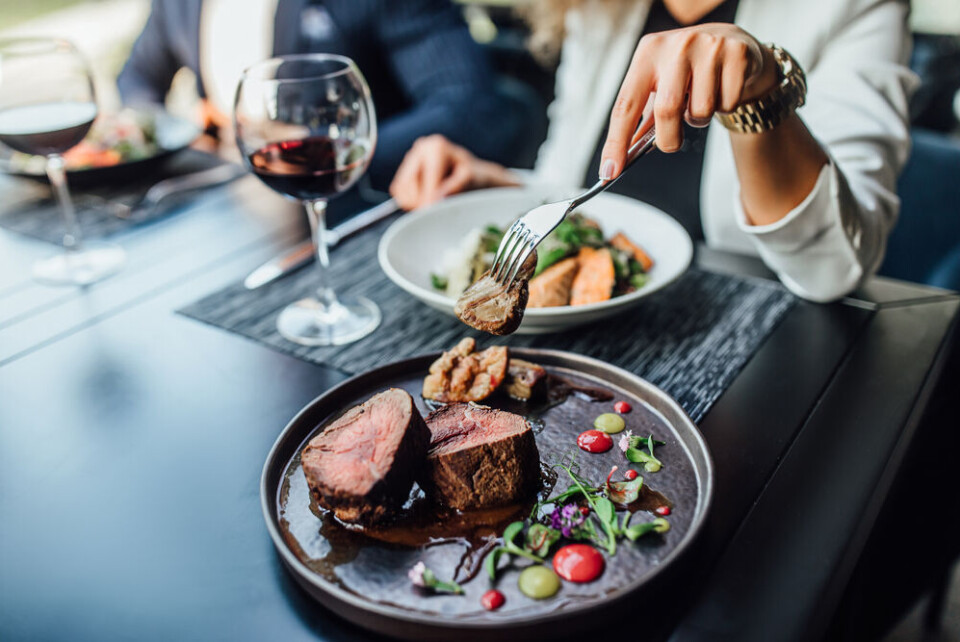
The French word viande (meat) seems so familiar – at least, it is to carnivores eagerly browsing supermarché fridge aisles in search of a rôti de porc (roast pork) or those keenly skimming a brasserie’s menu du jour to see if your beloved magret de canard (duck breast) is on today. (It probably is).
But the etymology of the word viande is perhaps less well known, even to those with a fair level of linguistic interest or knowledge.
In ancient French it has a broader meaning, referring to nourriture (food) in general, stemming from the Latin vivenda meaning “that which serves for life”. As for nourriture, still used today, it evolved in the12th century from Latin nutritura (“nutrition, the action of feeding”).
If you wish to speak in more vulgar terms about food and eating, la bouffe (which might be translated as ‘nosh’, ‘grub’, ‘chow’ or ‘scran’ is your friend).
Just don’t expect anyone with a modicum of class to be impressed to hear you say it: bouffer (verb) is for animals or those who eat copiously, too quickly or with their mouth open; manger is for humans.
The classic 1973 Franco-Italian film La Grande Bouffe, starring acting giants Marcello Mastroianni, Philippe Noiret, and Michel Piccoli, explores the idea of hideous greed and decadence, with a gathering of friends hell-bent on eating themselves to death. In Italian, abbuffata means “binge”.
As a noun, la bouffée means a gasp of air or exhalation or a puff of smoke.
Back to viande, and such are the vagaries of la langue française that there is a verb, viander, which refers very, very specifically to a deer grazing – though the meal in question will, of course, be vegetarian.


