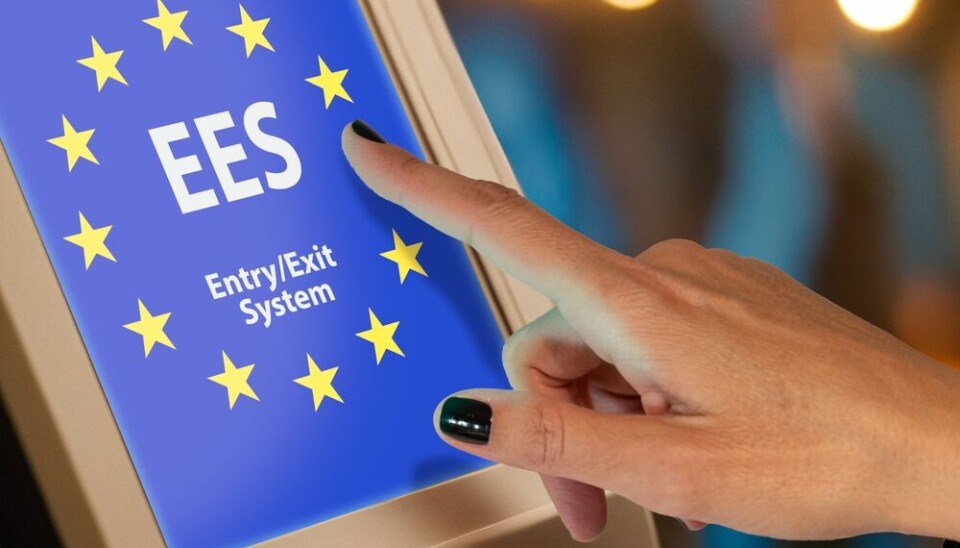
France set to miss EES deadline for registering all travellers
Technical difficulties with pre-registration equipment and its software hampering rollout efforts
The deadline for full registration is 31 March 2026
Ivan Marc/Shutterstock
An EU deadline which states that the new EES digital borders system should operate for all relevant travellers is set to be missed in France.
A European regulation created last year to allow a phased (or ‘progressive’) rollout over six months states: “By the 170th day from the first day of the progressive start of operations of the EES, each member state shall operate the EES with biometric functionalities at all its border crossing points and shall register in the EES all third-country nationals [who are visiting for a short stay].”
This deadline, which falls tomorrow (170 days after the start on October 12), is ten days before the official start of full operation on April 10.
From that point, passport stamping is meant to end, and provisional rules allowing full suspensions of EES at certain border points at busy times are also set to end (brief, ‘partial’ suspensions, with no collection of biometrics, will remain possible for a limited period and will have to be reported to the EU).
Around six months after this, it is planned, the EU will launch ETIAS, an online permission to enter the Schengen area, similar to the UK’s ETA scheme. If there are ongoing delays with full implementation of EES, this could also have knock-on the start of ETIAS.
We do not have full details of the state of progress at France’s Schengen borders, but two major points of arrival for Britons – Eurotunnel and the port of Dover – report not yet using EES for passengers in cars, the major part of their customers, but only coaches and lorries. Concerns have also been expressed in recent days and weeks by other sectors of the travel industry.
It comes as the Belgian authorities have also announced they will put off the full registration of all travellers with biometrics, due to long queues at airports, as the technology and infrastructure are not able to cope. They plan to ask the EU to agree a more "realistic" calendar.
A spokesperson for Dover port, where French checks are undertaken on British soil, said: “We are working closely with our French border agency partners to ensure a smooth introduction of the EU Entry/Exit System (EES) for tourist passengers, which includes waiting until current issues with the French technology are resolved and thorough testing at Dover has been conducted.”
At Eurotunnel, a spokeswoman said the French police aux frontières (PAF) will start manually registering travellers in cars in the EES at the border crossing points as of April 10, but it will initially be done without the taking of biometrics (facial image and fingerprints). Passports in the meantime will continue to be stamped, she said.
She said the PAF plans to operate a maximum number of passport lanes and will stand ready to make adjustments to operations depending on real-time conditions.
“Working closely with PAF and the French authorities, full biometric checks will be introduced once we receive the formal go‑ahead, with the rollout carefully scheduled and coordinated, particularly during peak periods,” the spokeswoman added.
“This coordinated and flexible approach will help maintain smooth operations and deliver the high‑quality, stress-free travel experience customers expect from LeShuttle.”
Issues at airports, Eurostar and Channel ports
In past weeks there have been reports of EES pre-registration kiosks remaining out of action at major airports, and Aéroports de Paris, which runs France’s largest airports, as well as groups representing airports and airlines, have spoken of fears of congestion as summer approaches.
Airports body ACI Europe today reiterated “serious concerns”, noting that the end of the phase-in is arriving “right in the travel peak of the Easter holidays”.
It says some airports already report “deterioration in waiting times”, with queuing regularly reaching two hours at peak times, and it calls for the right to continue partial, or even full, EES suspensions through the whole summer season if necessary.
Eurostar states that EES enrolments are still being done manually by border guards and it is “working closely with the French and EU authorities as they confirm the next states of EES activation, including the introduction of kiosk-based processing, and awaits the French interior ministry’s guidance on any updates relating to kiosk software”.
Ports de Normandie, which operates Caen-Ouistreham, Cherbourg and Dieppe ferry ports reported in mid-March still awaiting pre-registration equipment deliveries from the state.
Its recently-published 2025 annual report states with regard to the ‘outlook for 2026’, that “concerns persist as to the negative impact these [EES] controls might have on the management of port calls, customer experiences and operating costs”.
This was also echoed by French ports body Union des Ports de France, which last week alerted of “serious risks of congestion and disorganisation at the border crossing points” linked to software failures and called for an urgent meeting with the transport and interior ministers.
In a February 23 update to the European Parliament, an EU commissioner said the rollout was going well on the whole across the EU, though with significant technical issues at national level in three unnamed countries.
He also said there were wider concerns over some pre-registration equipment not functioning optimally for the taking of biometrics, and noted long waiting times at peak periods at some border points. The commission would keep the situation under review, he said.
The system was also reported to be already identifying thousands of Schengen area ‘overstayers’ (people not respecting the rule of staying no more than 90 days in any rolling 180-day period) which is one of its aims.
The French government recently stated it was still aiming to meet the April 10 full operation date.