More communes in France distribute Asian hornet traps
Residents are increasingly receiving help, with now the best time to capture the queens
Using traps to capture queens before they build new nests is one of the most effective ways to combat them
Dsandig / Alexandre Prevot / Shutterstock
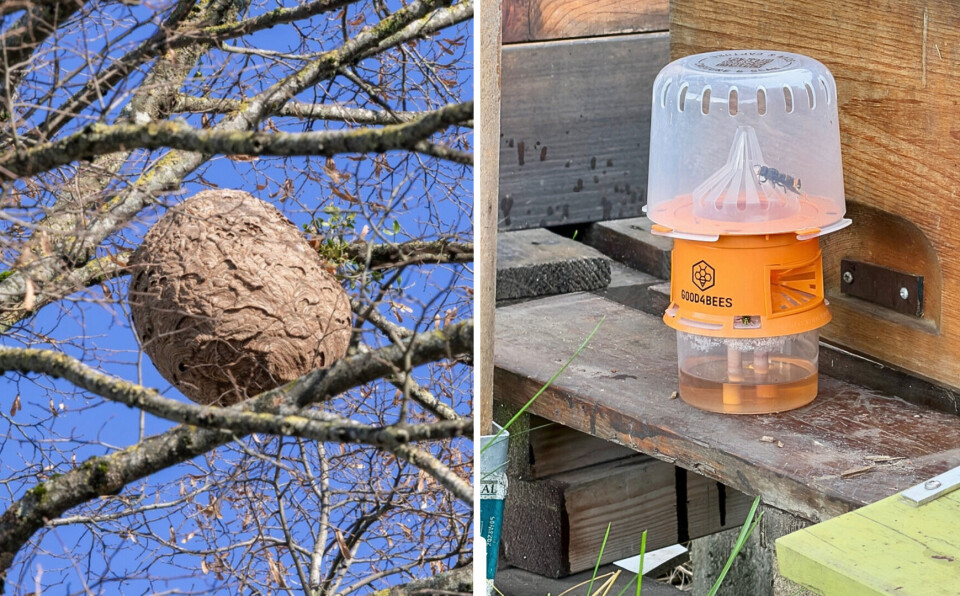
More and more communes across France are distributing Asian hornet traps and tips on how to capture the invasive insects, as authorities seek to combat the threat at the source.
Asian hornets (scientific name Vespa velutina) were first noticed in France in 2004, and are today found in almost all regions.
Authorities all over France have begun distributing free traps to local residents, along with advice on how to use them to best capture (and prevent the number of) as many hornets as possible in 2026.
Communities are stepping up anti-hornet efforts now, because experts say that the best way to combat them is to attack the queens as nests begin to appear in mid-February.
Hornet queens spend their winter in small holes in trees, fences or in the ground, before starting a new colony when the weather gets warmer. It is thought that one captured queen leads to a reduction of 20,000 fewer hornets at peak season.
Areas currently rolling out campaigns include:
Aisne (Hauts-de-France): Beekeeper union le syndicat Abeille de l'Aisne has been working with local mairies and associations to distribute traps and helpful leaflets, as well as monitoring the number of insects caught per week in the area
Saint-Marc-Jaumegarde (Bouches-du-Rhône, Provence-Alpes-Côte d'Azur): The mairie is distributing traps to locals, with dozens of people reportedly interested in taking part in the campaign, reports La Provence
Achenheim (Bas-Rhin, Grand Est): The beekeeping centre of nearby commune Molsheim is set to present a session on Asian hornets, their lifecycle, and how to catch them, on February 12
Villefranche-de-Rouergue (Aveyron, Occitanie): Rémy Castagné, of insect and pest control service Allo Frelons 12, has been advising authorities and residents on the best way to combat the insect
“We need to build the traps now, start organising ourselves at community level, and draw up a map showing the location of each trap,” said Francis Dussart, an expert beekeeper and specialist in Asian hornet trapping in Aisne, to France 3.
“Mayors could maybe use it as an election argument,” he added. “Say you are going to give out traps, and maybe you will get some voters.”
Asian hornets tend not to attack humans directly unless they feel their nest is threatened, but they do present a threat to bees, butterflies and wasps. They can be dangerous to humans who are allergic to bee, wasp, and hornet stings, and can cause severe reactions or (rarely) death.
“We should start teaching our children about the dangers of the Asian hornet at school,” said Mr Dussart. “It is not a common insect, it is an invasive and dangerous species.”
Queen season
Other areas to have recently launched public anti-hornet campaigns – including the distribution of free traps – include the Communauté d’agglomération Royan Atlantique (CARA) in Charente-Maritime; Gennes-Val-de-Loire, in Pays de la Loire; and Alès, in Gard (Occitanie).
People can also make homemade traps, and fill them with a mixture of beer, red fruit syrup, and white wine. This attracts hornets, but repels bees. A grid in the trap ensures that the hornet can enter, but not escape.
Traps (of which there are several kinds available to buy, as well as homemade ones) catch queens up to April-May. After this, they should be removed to avoid them from accidentally trapping other insects that are important to wider biodiversity.
If you notice a nest near you, official advice from the non-profit organisation Fredon (an organisation appointed by the government in 2024 to oversee the management of Asian hornet populations nationwide) is to call a local pest controller and have the nest destroyed professionally.
Asian hornet markers
Asian hornets can be identified by their single yellow/orange band towards the top of their black-coloured abdomen, their yellow ‘socks’, and orange face.
They can also be distinguished from their European counterparts by their smaller size.