Now is the time to install Asian hornet traps across France
Catching the queens early reduces problems later, with 2026 set to be a challenging year
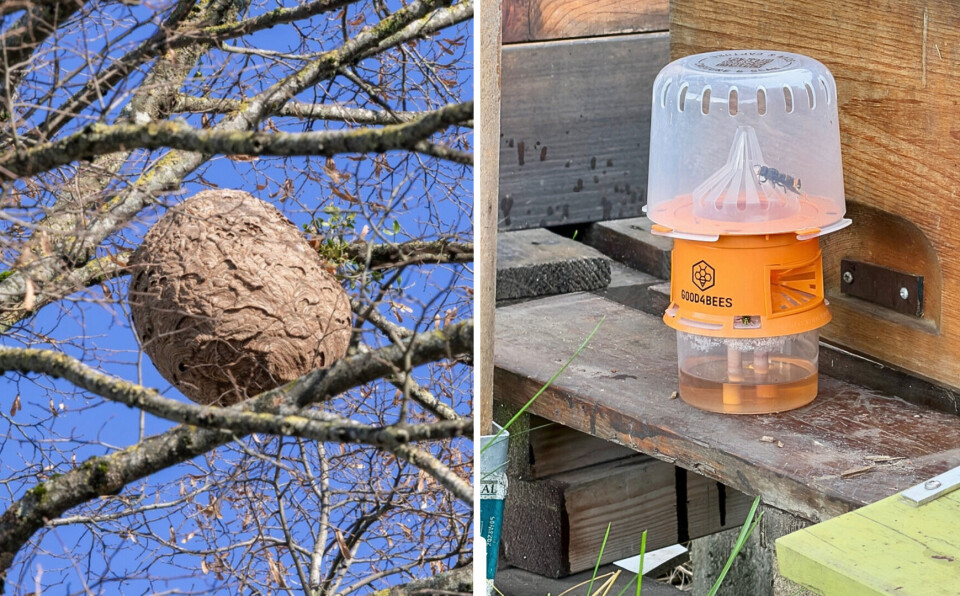
Using traps to capture queens before they build new nests is one of the most effective ways to combat them
Dsandig / Alexandre Prevot / Shutterstock
Residents in France are being encouraged to install Asian hornet traps this month (March) in a bid to stop queens from laying eggs so as to prevent the spread of the insects later in the year.
Beekeeper associations across the country are aiming to raise awareness of the importance of targeting the insects early, as the queen hornets prepare to create nests and lay eggs that will hatch in late spring and summer.
This year, 2026, is set to be particularly challenging for the fight against Asian hornets, beekeepers have said, with the Muséum national d'Histoire naturelle warning of a particularly “rapid invasion” due to the mild winter, which has helped more queens survive hibernation.
The situation is especially critical in the Île-de-France and south-west regions, with beekeepers reporting to Le Parisien that “warning signs are multiplying”, and that the number of nests and colonies has already “exploded” in certain areas.
Invasive species
Asian hornets, which were first spotted in France in 2004, have now been identified in all parts of the country, and are particularly common in the southern, warmer regions such as Provence-Alpes-Côte d'Azur (PACA). They are an invasive species and cause damage to bee hives and populations. They tend to proliferate quickly, due to a lack of natural predators.
Asian hornets are distinct from European hornets. The latter do not usually harm bees, and are necessary for the native ecosystem. Asian hornets can be identified by their yellow legs and yellow tail tip (as distinct from the more yellow and black striped thorax seen on a European hornet).
In fact, Pauline Brand, at dangerous insect prevention association Fredon, believes the insects should be called the ‘yellow-legged hornet (frelon à pattes jaunes)' rather than ‘Asian hornet (frelon asiatique)’. This is more accurately descriptive, she said at a public meeting on the issue in Grainville-sur-Odon (Calvados).
Free traps
APIVET83, the beekeeping association in Var (PACA), is among those urging residents to install traps in their gardens, and to do everything to avoid the proliferation of laying female hornets, including restricting their access to water in your garden.
Many associations like this are offering Asian hornet traps to local residents, either for free or for a small fee. Residents are encouraged to use proper hornet traps rather than try to make their own, as the latter run the risk of attracting and killing all insects, as opposed to targeting the Asian hornet only.
Francis Desmarais, president of the APIVET83 association, is working with mairies in the region to help keep the cost of hornet traps to a minimum to assist residents’ efforts.
“By setting traps early in the season, you are much more likely to kill only Asian hornets,” he said, to France Bleu. “This is therefore the best time to trap them and prevent them from building their nests.”
This is much more effective than trying to catch hornets later in the season that does not stop the insects at the source, he said. The nests start out as the size of a ping-pong ball and then “grow to the size of a handball” as the season continues, he said.
The mayor of Grainville-sur-Odon, Emmanuel Maurice, is among those to be encouraging residents to trap hornets as early as possible. “To avoid having too many in the second half of the year, the idea is to trap as many hornets as possible in the spring,” he said.