Issues with equipment and IT are hindering France’s ability fully to roll out the EES digital borders systems, more than 150 days since the beginning of the phased start.
Questions remain over the country’s ability to reach full operation by the end of this month, as planned in the phased-start regulation passed by the EU legislators.
EES involves non-EU/non-EEA/non-Swiss nationals visiting the EU (not those living in the EU) having to register for digital checks when passing external Schengen area borders, such as when travelling from France to the UK or US etc or vice versa.
When fully operational it includes the taking of a facial image and a fingerprint scan of the right hand.
Once registered a central EU database registry is created for registrants, in theory allowing future crossings to be faster.
A phased, or ‘progressive’, start was organised in response to the fact that France, Germany and the Netherlands did not report being ready to start by a previous planned date of November 10, 2024. Concerns had also been raised at the time about the ‘resilience’ of the EU’s central IT systems.
During 2025, EU legislators passed a regulation laying out new rules so that the system could be bedded in gradually. There had been fears of long queues if all relevant passengers at all of the EU’s Schengen area borders had to be registered from day one as originally planned.
After France and the other countries said they were ready, the phased start began on October 12, 2025.
What are the latest deadlines?
According to the phased start regulation, as of January 9 (90 days after the start), EES was due to be operational at 50% or more of French Schengen borders, with at least 35% of all relevant passengers being fully registered.
By March 10 (150 days) all French borders were meant to be using EES, with at least 50% of relevant travellers crossing French borders registered in the system.
By March 30, all passengers are meant to be registered, prior to the end of the phased start on April 10, when passport stamping is set to be replaced by digital records only.
What progress is there in France?
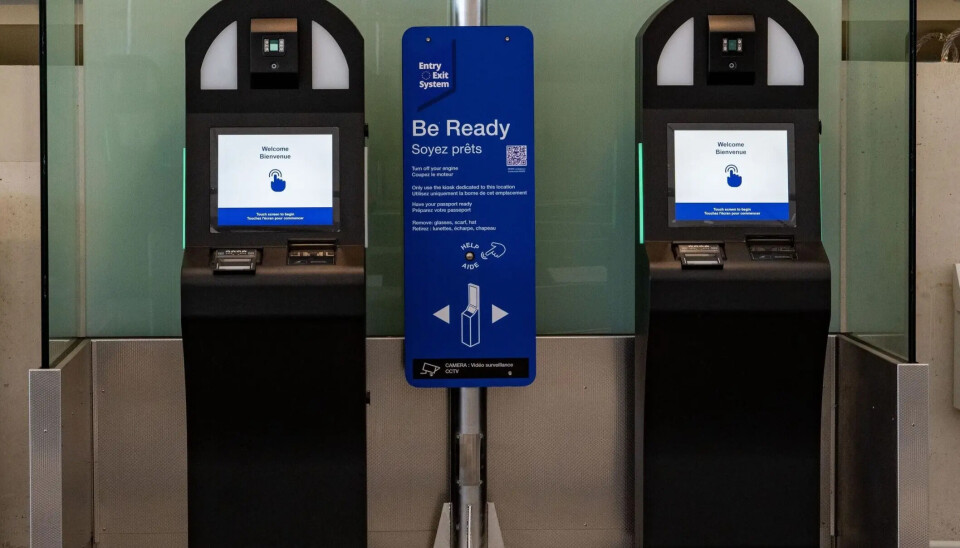
To help reduce queues at borders linked to EES, France said it would make use of ‘pre-registration devices’ (PRDs) at major airports, ferry ports and at Paris Gare du Nord and London St Pancras, as well as the Eurostar terminals.
These are self-service kiosks or tablet computers where people can input most EES information via a passport scan and biometrics (fingerprints/facial image). The tablet option was planned at some ferry ports (not Dover, which opted for kiosks).
The phased start in France began quietly, making full use of a slow phase-in. There were, however, later reports of long queues at France’s busiest international airport, Paris Charles de Gaulle.
Signs of further difficulties emerged as 2025 ended with neither the Port of Dover nor Eurotunnel implementing EES for passengers in cars as had been expected by the end of the year.
Users at French airports also reported EES kiosks being out of action, and them still having to undertake the full EES process at a border guard’s desk.
Work is also ongoing to allow compatibility with Parafe e-gates and EES, to avoid the need for many nationals, such as Britons and Americans, to queue to pass via border guards.
This work is expected to include technical adjustments so they can also recognise foreign residents of France, thus allowing them also to bypass booth queues (as was possible prior to EES).
Below, we give further information at the 150-day mark.
Port of Dover
The Port of Dover which sees millions of passengers a year travelling between the UK and France, mostly by car, said: “EES is still only operational for coaches, freight and foot passengers at the port. We do not have a confirmed go-live date for tourist cars currently.”
Eurotunnel
Eurotunnel parent company Getlink told The Connexion earlier this year it has been registering coach passengers and lorry drivers since October 12 and this is “running smoothly”.
It said its kiosks are working and are regularly tested, but it is waiting for the “green flag from the French authorities” for the next phase.
We have not had a response to a request for an update this week, but its website still indicates that EES for car travellers is still pending.
Ports de Normandie
A spokeswoman for Ports de Normande, responsible for the Ports of Cherbourg, Dieppe and Caen-Ouistreham, said: “We have no further information on this. As the state hasn’t supplied the expected equipment, the checks are still being done in a non-optimal way.”
Eurostar
Registrations are still being done manually by border officers.
Eurostar is working with the French and EU authorities towards confirmation of the next stages, including kiosk-based processing.
They are also awaiting guidance from the interior ministry as to “any updates relating to kiosk software”.
Additional lanes for manual booths for the French border force have been set up.
Airports
One Connexion team member who passed through Nice airport this week noted that kiosks were still not in use, so he had to pass via a border guard’s booth. "The kiosks did not appear to be working, though one was lit up," he said.
However, at the desk he was recognised as being already in the EES system from previous trips on having a facial scan as confirmation of identity. He did not also have to give fingerprints, as required on previously trips, as "the camera recognised me".
European Commission raises concerns
At a meeting of the European Parliament's LIBE committee on February 23, Henrik Nielsen, the European Commission’s director for Schengen, Borders and Visas, told MEPs the rollout was progressing well on the whole.
However, he said: “We do see a few member states who are quite a bit away from the current 35% threshold, three member states, to be more particular, where they are facing technical issues at national level – how the national system is connecting to the central system.
“We are following that up with them and I would say this is our main concern at this stage of the rollout.”
Asked if the three were the same ones that were not ready in 2024, he said that one country was among the original three and it was “experiencing quite some issues at national level”.
He added: “There is no time to lose for those three member states to get their national systems in order. That needs to happen ASAP.”
The Connexion has asked the European Commission if France is one of the three states.