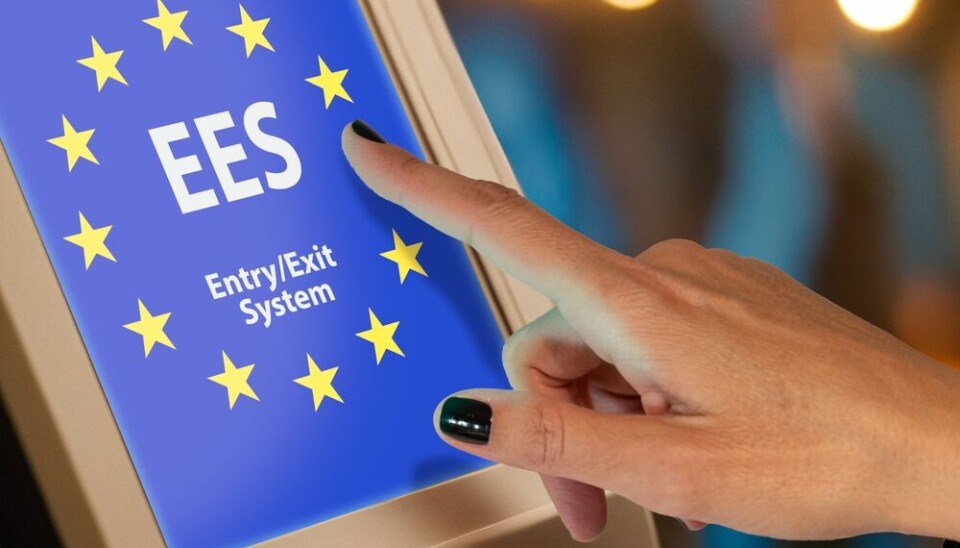
EES checks paused? European Commission responds to media reports
Rumours come as Ryanair renews calls to France's interior minister for stoppage over summer
Full implementation of the EES digital borders system has been patchy so far in France
Copyright (c) 2025 Ivan Marc/Shutterstock
The European Commission has clarified the situation with regard to a ‘new pause’ on EES digital border controls this month amid media speculation as to some countries’ plans.
It also confirmed to The Connexion that no official authorisation was agreed for Greece to stop collecting EES biometric data (facial images and fingerprints) from British visitors, as the country recently unilaterally decided to do.
Officials added that, despite rumours that Italy and Portugal – and potentially other countries such as France – may follow suit, “the Portuguese and Italian authorities confirmed that they do not intend to exempt any nationality”, meaning for the time being Greece remains an exception in this.
This comes as Ryanair, which runs many low-cost flights to and from France, renewed its calls for complete suspension over the summer, saying many passengers faced hour-long passport queue waits during the long bank holiday weekend last week.
“The French authorities have known for over three years that EES would become fully operational from April 10, 2026, yet they have failed to ensure adequate staffing, system readiness or kiosks are in place and working,” the airline said in a statement.
“These excessive passport control queues cannot continue into the peak summer season. Ryanair has already written to governments across the 29 EES countries – including to French Interior Minister Laurent Nuñez – urging them to suspend EES until September.”
In France, EES rollout on the ground remains patchy. In particular, the Port of Dover has yet to announce even starting to register travellers in cars and the system is also not operational at the Normandy ferry ports.
This is despite France not having obtained any official EU permission to depart from the intended ‘full operation’ of the system from April 10.
French airports are registering relevant travellers (non-EU/non-EEA/non-Swiss nationals visiting the EU) but pre-registration kiosks meant to ease queues are still out of action due to technical issues, leading to airports often pausing biometrics collection for longer than intended by the rules.
Eurotunnel reported starting EES for all relevant travellers, but without biometrics for car travellers so far.
Are rules being officially eased further this month?
Online media have stated that the European Commission has given new permissions to countries to suspend the collection of biometrics to ease long queues, however the commission told The Connexion that it gave no such authorisation beyond what is already provided for in the EU regulations for EES.
These state that, until July and (under certain conditions) likely continuing until September, certain border points may decide to suspend collection of biometrics for six-hour periods if queues build up too much. They are meant to report these stoppages to the EU.
“There has been no change to the EES regulation. Indeed, the EES regulation foresees flexibilities and fall back procedures that Member States can rely on when needed,” a commission spokesperson said.
From our analysis, there are no specific sanctions provided for if states do not follow the rules, however there is an understanding that they are meant to comply for the overall efficient functioning of the scheme.
EES is intended to monitor all comings and goings of non-EU/EEA/Swiss visitors to the Schengen area, improving security and compliance with the 90/180 days visa-free visiting rule.
It is also meant to allow physical stamping of passports to end, and it is a pre-requisite for the planned launch later this year of the ETIAS online application for approval to enter the Schengen area.
What is happening with Greece, Italy and Portugal?
The commission spokesperson said: “The commission is in contact with Greece to clarify the situation and recall the existing rules, including on the flexibilities allowed by the current framework.
“As a general rule, the EES foresees flexibility when it comes to the registration of biometrics until after the summer period this year.
“The suspension of the collection of biometric data is possible at specific border crossing points and for a limited amount of time in cases of exceptional circumstances that lead to excessive waiting times.
“The legal framework does not foresee blanket exemptions for nationals of specific third countries and for an extended period of time.”
There are reports this week of Portugal and Italy now informally extending the relaxation of rules to passengers generally, however this is not linked to any specific permissions granted to them.