EES biometrics still on hold at Dover crossing to France
Pre-registration kiosks not expected to work until September


Published


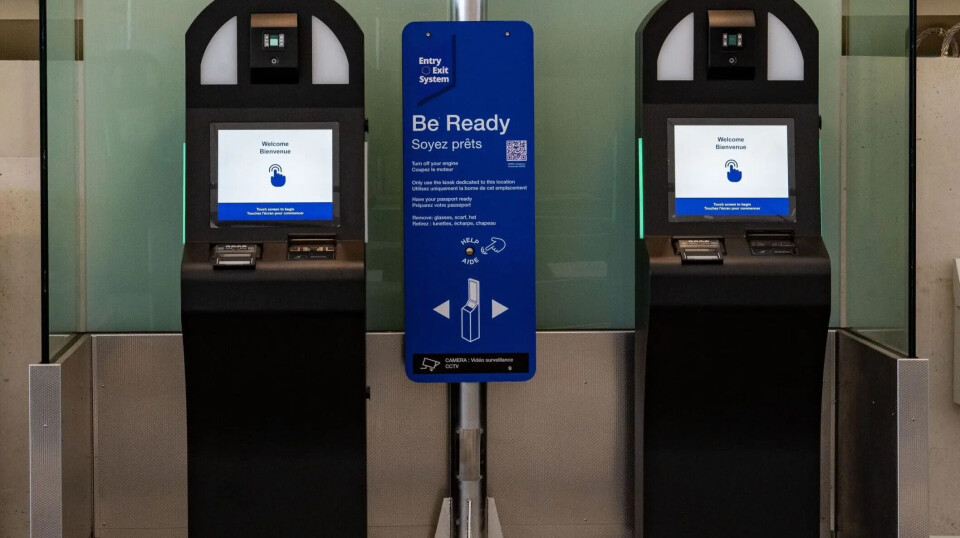
Non-EU citizen visitors travelling by car through the port of Dover or on Eurotunnel trains will continue to skip providing EES biometric data, with pre-registration kiosks now not expected to be operational until September.
Eurostar also continues to register travellers in the EU databases without collecting biometrics (facial images and fingerprints), pending kiosk availability.
At Dover, where passport data for relevant car travellers is entered into EES by border guards, a spokeswoman said: "Biometric data collection [at kiosks at the western docks] will not be in force this summer as the French technology hasn’t been installed to run the kiosks we’ve supplied.
"We don’t have a date for this going live. So for cars, it’s manual file creation at the border at the eastern docks."
Coaches pass through the new western docks area, but kiosks are also not yet operational.
Instead, border guards create passengers’ EES files at booths, in some cases collecting biometrics there.
'No biometrics this summer'
A Eurotunnel spokesperson said: "Eurotunnel can confirm that there will be no EES biometric capture at its terminals in Folkestone and Calais this summer.
"LeShuttle customers will continue to travel as normal throughout the peak season, with no change to the process through its terminals.
"The creation of EES files for non-EU travellers, introduced in April, will continue at the border by the French border police."
It said testing with the French authorities is continuing, with kiosk-based biometric capture expected to begin "after the summer peak".
A Eurostar spokeswoman said: "We don’t have a confirmed date for the kiosks and continue to work closely with the authorities whilst maintaining a fluid experience in our stations."
At larger airports, kiosks also remain out of use except for occasional tests.
The interior ministry told The Connexion it regularly meets with the transport ministry and port, airport and rail operators to assess progress and provide reassurance.
Flexible rollout
A spokesperson said that EES has already proved effective, including by helping identify and block entry to travellers posing security risks.
France has chosen to make "reasonable and pragmatic" use of the flexibility allowed under the EES regulation, which permits temporary pauses in biometric collection, to maintain passenger flows, particularly during busy holiday and bank holiday periods.
"Thanks to the coordinated efforts of all government departments and platform operators, France has so far experienced "no situation of major congestion".
The ministry added that significant technical work has been carried out to allow the wider rollout of pre-registration kiosks, as well as tablets at certain ports, with a view to minimising the impact of EES on border control times as much as possible.
"This work will continue throughout the summer, with the aim of achieving a satisfactory level of performance and stability by 6 September.
"France, alongside eight other member states, has raised with the European Commission the value of considering the retention of certain flexibilities for the future; these discussions are ongoing.
"Finally, the government is continuing its efforts, with 350 additional staff already dedicated to the roll-out of EES and the development of other measures to improve flow in the medium and long term: the roll-out of the European mobile app for remote pre-registration in collaboration with Frontex, and discussions on the proposed expansion of access to PARAFE checkpoints.
"Everyone has been able to see on the ground that every effort is being made to minimise congestion caused by the EES, and the government will ensure a gradual and controlled ramp-up in the use of the kiosks throughout the summer period, whilst fulfilling its obligations."
Commission is supporting member states
A European Commission spokesperson said “the commission has been continuously supporting member states in tackling challenges” and “this support will continue to the fullest extent possible”.
Its services had, in early July, had a “very good meeting with the airport industry in which the work undertaken by national authorities to address remaining issues at specific airports in some member states was discussed”.
She added that the EES rules already include in-built flexibilities and fall-back procedures to address exceptional situations, including the possibility to temporarily suspend the registration of biometrics in case of exceptional circumstances during the summer.
"In this case, entries and exits, as well as refusals of entry, must still be registered in the EES with alphanumeric data.
"This possibility exists until September, therefore covering the peak summer travel period.
"Border fluidity should also be ensured by the member states by providing adequate number of border guards, automated solutions, such as self-service kiosks and e-gates, and use the pre-registration app Travel to Europe. This is particularly important at heavy-traffic border crossing points.
"When it comes to the time after the summer, we are in close and constructive contact with those few member states where there are challenges at certain border crossing points. There is a strong joint will to make the system work everywhere. And we work together with member states in this spirit."
Asked if the challenges so far with regard to full operation may delay the planned introduction of the ETIAS online travel authorisation scheme, the spokesperson said: "Preparations for the launch of ETIAS are ongoing.
"Obviously, as with any large-scale IT system, many factors come into play when deciding when to launch it. Once all conditions are in place, the commission will set a date for the start of the system."