How France plans to tackle health disinformation
Online campaigns and new watchdogs amid strategy, but ‘scores’ for information and sanctions ruled out for now
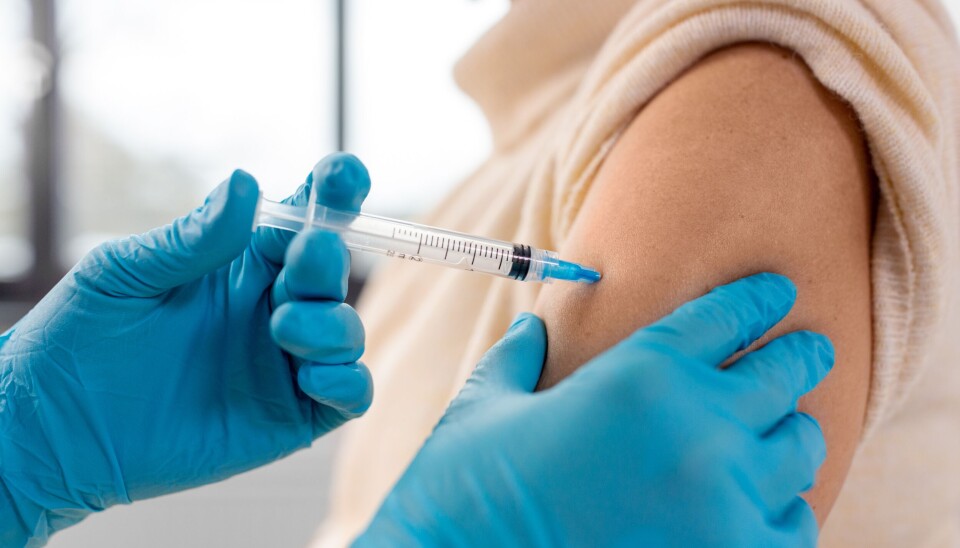
Disinformation around Covid-19 vaccines was seen in France
Syda Productions/Shutterstock
France’s Health Ministry has unveiled a plan to combat health misinformation, which it claims is “one of the vectors of attack on democracy,” facing the country.
The plan, which comprises several strategies, was announced by Health Minister Stephanie Rist following the submission of a major report on health information and misinformation in France.
“When false information circulates faster than science, it is the most vulnerable who pay the heaviest price. And, faced with this, the State cannot remain silent or simply react to each incident,” she said in a press conference about the new campaign.
The strategy will expand on initial plans brought forward by previous Health Minister Yannick Neuder.
Health disinformation has been a growing problem in France, particularly since the Covid-19 pandemic. Vaccines for the disease were particularly targeted.
Four-part strategy
The Ministry will use a four-part plan to target disinformation.
The first element will see a public barometer assessing national belief on health disinformation, available from April 2026 and which will compile data from several opinion polls.
In addition, a citizens' committee on misinformation will be formed next month to assess the issue.
The second measure will see a ‘Health Disinformation Observatory’ set up, with the aim of “sharing information with the Ministry's partners, the media, learned societies, professional bodies, and healthcare professionals,” about health disinformation.
Its final structure is yet to be confirmed and “its governance and the mechanisms for guaranteeing its independence are under consideration,” said the Ministry.
The third measure is the announcement of a new information monitoring system that will look for misinformation spreading online and then quickly plan and publish counter-measure and correct information.
The system will “mobilise a community of allies (Regional Health Agencies, supervisory bodies, research institutes, a network of experts, journalists, and influencers)” to provide responses.
These will then be shared primarily through social media sites such as Instagram and TikTok where misinformation can spread easily.
Both the observatory and system are expected to be controlled by the Ministry, although some have asked it is managed by an independent body to ensure it does not become a partisan tool of governments.
Regardless of the final make-up of the observatory however, it “will have an oversight committee that will report annually to Parliament,” said Ms Rist.
A fourth and final measure will see a new focus on tackling health disinformation run through France, improving education and trust in the healthcare system “from nursery to nursing homes.”
This will look to integrate health disinformation tactics into education programs, particularly high-level research courses.
The announcement did not include an indication of the cost of the scheme.
Further expansion possible
Some experts touted the idea of an ‘Info-Score’ to be used for health claims, similar to the ‘Nutri-score’ labelling used for foods.
The rating would be based on the sources used, their scientific validation, and whether there was any conflict of interest between the person making the information and their personal or professional life (for example, a dairy lobbyist promoting claims about the health benefits of drinking milk, etc).
However the government is “not ready to put a grade on information,” Ms Rist said.
Later expansions to the campaign could include greater protection for experts who fight disinformation online, as well sanctions for those found to be spreading disinformation.