






-
What French should you actually be learning before moving to France?
Time spent accumulating vocabulary you rarely use may leave you less prepared than time spent learning relevant words and practising real-life situations
-
Different ways of using de in French
Using de with an adjective feels strange to English-speakers
-
Learning French: when and why do we say avoir le melon?
Discover its origins and when to use it to describe someone with an inflated ego
‘Casse-tête’: this French phrase is a conundrum or head-scratcher
We explore when to use this useful expression if a puzzle is ‘breaking your head’
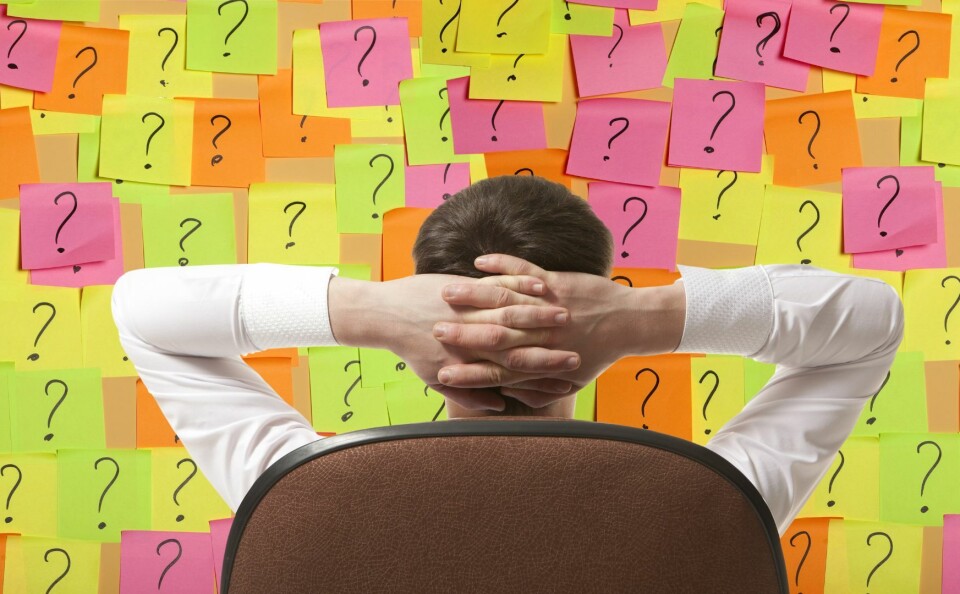
Casse-tête translates as brain teaser, puzzle, or more broadly, challenge.
A literal translation of casse-tête is 'head breaker'.
In everyday French, a casse-tête is a puzzle game that can be played by one or more players.
Read more: Thousands play Wordle-like word game inspired by old French TV show
These include mechanical puzzles such as Rubik’s cubes, number games such as sodoku and even card games such as solitaire.
While such games are played for fun and entertainment, there is also an element of logical or mathematical deduction that can be challenging for the mind too.
The French expression refers to this mental challenge.
In this sense, a casse-tête is a problem that is difficult (or even impossible) to solve, or a problem that is so annoying it becomes a headache.
It is often used to describe a situation in life where you cannot see a way through or do not know what to do for the best.
Related articles
Four French words to fill gaps in vocabulary that mean 'the thing'
Five French phrases with same English meaning - just swap the animal
Au pif: How many of these French estimation phrases do you know?


