Farmers block motorway in western France: are protests returning?
Around 50 tractors blocked the A87 for almost four hours amid demands for improved water policy
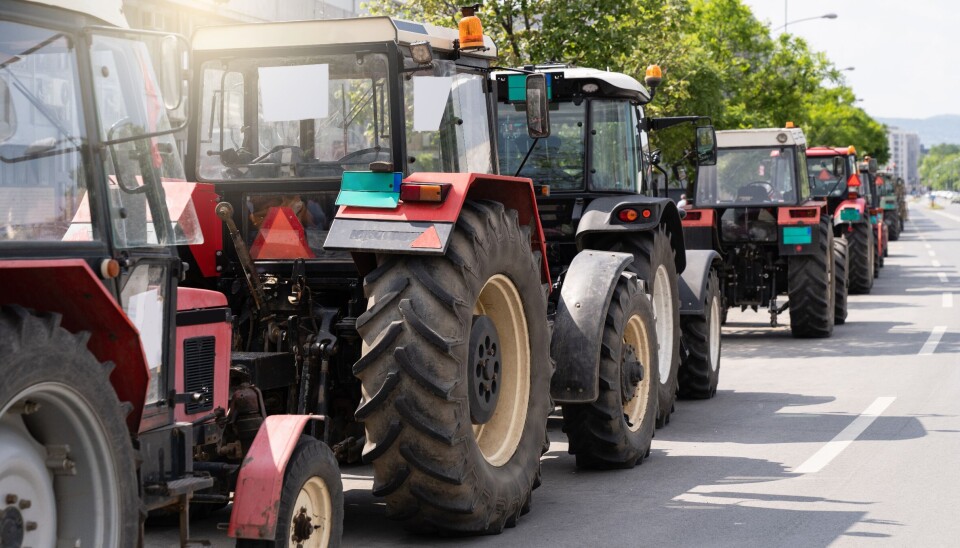
The blockade referenced recent flooding in the department. Photo for illustrative purposes only
Scharfsinn/Shutterstock
A farmers’ protest on a motorway in western France yesterday (March 3) has raised concerns that a new wave of action may be starting.
Members of the FDSEA and Jeunes Agriculteurs unions blocked the A87 in Maine-et-Loire with around 50 tractors, causing severe disruption for travellers heading towards Angers.
The action lasted three hours and 45 minutes – a precise time chosen for symbolic reasons.
Protesting “administrative inaction… {and] a genuine water storage policy in the face of climate change,” the farmers tied their protest to the recent flooding experienced in the department.
River levels “reached 5,000 cubic metres per second at the Montjean-sur-Loire water station during the recent floods,” the protesters said in a press release.
"The annual irrigation needs of agriculture in Maine-et-Loire average 54 million cubic metres, and 11 million cubic metres for livestock watering… If this water were stored for three hours and 45 minutes, it would cover our irrigation and livestock water needs for a year.”
Traffic levels returned to normal after the protest.
Are more protests on their way?
As of 08:00 on Wednesday March 4, there have been no reports of further protests or blockades.
However, tensions between farmers and government authorities remain high since the major protests in December 2025 and January 2026.
Protests died down after the government agreed to several demands from the FNSEA, the largest farmer union, and a largely successful vaccination campaign against lumpy skin disease that had been impacting cattle in the south
The ‘Mercosur’ trade deal diverted anger towards the EU, after the landmark free trade agreement with South American countries passed despite France voting against it.
There are four major farming unions in France; the FNSEA, its youth wing Jeunes Agriculteurs, the right-wing Coordination Rurale and the left-wing Confédération Paysanne, with several other smaller groups such as the FDSEA.
While major action can be organised – or put on hold – by national union hierarchy, local branches have high autonomy and unlike strikes or protests in other sectors often decide on their own demonstrations at a local level.
This can make action hard to be aware of in advance (farmers do not need to give advance warning of protest action), and generally the use of tractors or other agricultural machinery makes any demonstration extremely disruptive either on roads or town centres.
Alongside motorway blockades and ‘snail operations’ (driving extremely slowly along roads to build up traffic), farmers often target public buildings such as mairies or ministerial buildings for protests.
Farmers may also damage local infrastructure such as speed cameras.
Road blockades remain a major concern, as the ripple effects of blocking a motorway can lead to traffic jams across a department.
Our article here provides advice on how to check traffic levels in your area during other protests.