






-
French notaires want to reduce taxation on family gifts
The aim is to encourage earlier transfers of wealth between generations
-
Marine Le Pen outlines ‘national preference’ policies for French housing sector
Far-right candidate wants citizens to have priority access to social housing and to exclude non-citizens from housing benefits
-
French easyJet pilots postpone strike but flights at risk September 24 and 25
Change follows new round of negotiation over pilot schedules
Smokers trying to quit in France should not be offered vapes to help
Doctors should not offer e-cigarettes as a tobacco alternative due to lack of evidence as to the benefits and risks, says health authority
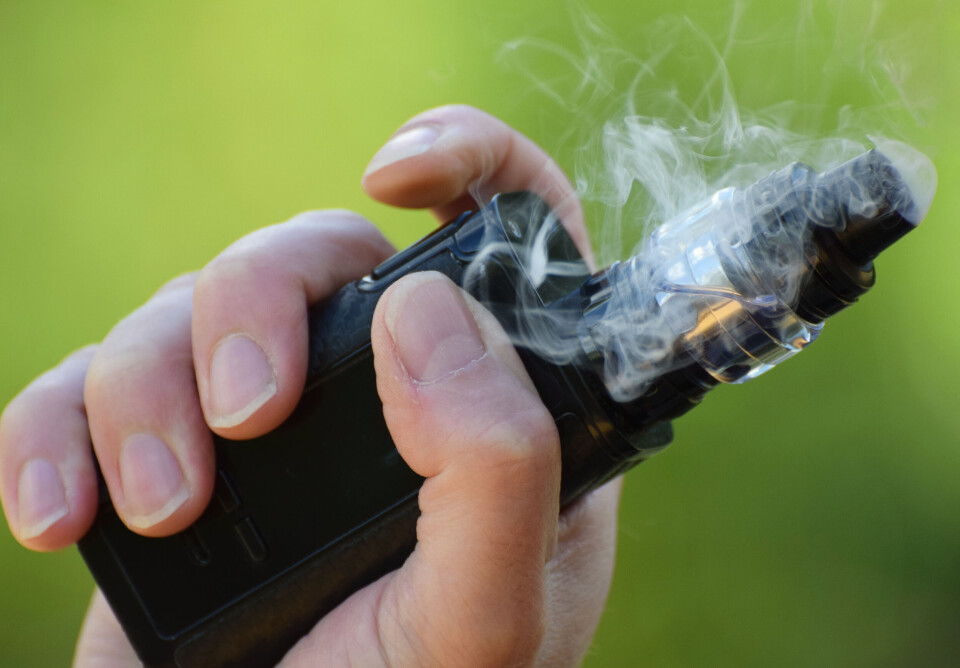
People trying to stop smoking should not be recommended vaping as an alternative by their doctor, French health body le Haut Conseil de la santé publique (HCSP) has said, in a change on previous advice.
Until now, the HCSP said that e-cigarettes or vapes could be considered as an aid to stop or reduce the consumption of tobacco.
But new advice published this week (January 4) states that health professionals should not recommend vapes as a stop-smoking tool as there is not enough perspective on the benefits and risks.
It states: “The current evidence is insufficient for health professionals to be able to suggest [electronic cigarettes] as aids to smoking cessation.
“Health professionals who are helping a smoker stop smoking must [instead] use medicinal or non-medicinal treatments that have proven their effectiveness.”
These include patches or nicotine gums, it said.
E-cigarettes are inhalers that vaporise nicotine liquid to simulate the act of smoking. While they do include nicotine, they do not produce smoke. In France, they are known as “vapers” or “vapoteurs”.
However, the HCSP stated that it does not condemn e-cigarettes completely.
It said: “They can be used outside of (or as a complementary part of) care in the context of a care system.
“[Although we are not certain of the risks or benefits] when used outside of the health system, these products may be helpful for certain consumers and contribute to an improvement in their health.”
The issue is not without controversy in the medical community.
Some health authorities, including the WHO (World Health Organisation) said in July that electronic cigarettes could be "dangerous" and should be regulated.
But some addiction specialists stay that e-cigarettes are less dangerous than tobacco, and that the former is preferable to the latter.
E-cigarettes have hit controversy elsewhere too. In 2015, the International Civil Aviation Organization banned them from hold luggage on commercial flights, after fears that their batteries and heating parts could cause a fire. Most airlines also ban their use within the cabin.
They are also banned from use on SNCF trains.
And in 2018, a study from independent consultancy Odoxa-Dentsu suggested that Santé publique France figures showing that one million people had stopped smoking between 2016-2017 were actually due to a rise in the use of e-cigarettes.
It also showed that a significant percentage of people in France considered e-cigarettes to be a “stop smoking” aid, with more than two-thirds of respondents believing that the use of vapes plays a major role in reducing smoking levels.
Yet, only 30% of the smokers polled said that they only use vapes - 69% said that they mainly combine their usage of vapes with real tobacco.
Related articles
Drop in smoker numbers actually due to rise of 'vapes'


